


Quick Answer
A kitchen remodel in 2026 typically costs $75,000–$200,000+. To budget effectively: set a realistic number, prioritize your wishlist, and secure financing before construction begins.
Budgeting for a kitchen remodel is the single most important thing you can do before demolition day, and one of the most underestimated. Material costs have risen steadily since 2021, lead times on cabinetry and appliances remain unpredictable, and the range between a “basic refresh” and a “full gut renovation” spans tens of thousands of dollars.
This article walks you through seven concrete steps to set your kitchen remodel budget with confidence, avoid the most common financial pitfalls, and work productively with a contractor to stay on track.
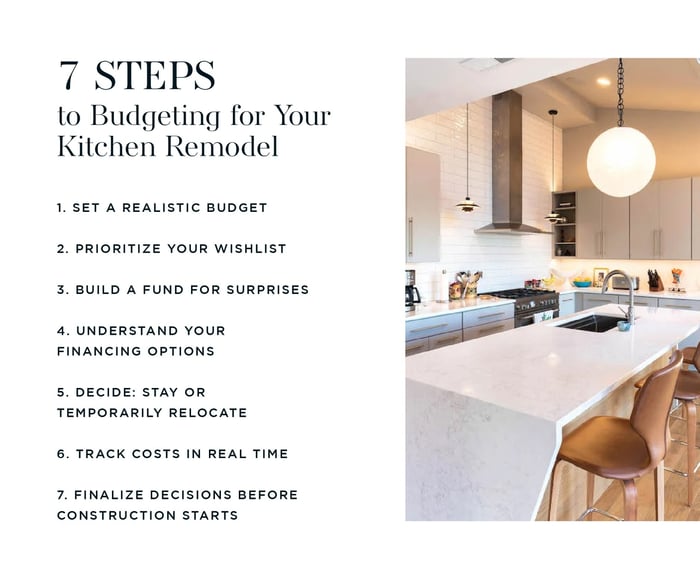
1. Set a Realistic Budget Based on Your Project Scope
Before you can stick to a budget, you need one that’s grounded in reality. The single biggest mistake Pennsylvania homeowners make is choosing a number they “feel comfortable with” before understanding what kitchen remodels actually cost in the area.
Same-Footprint Kitchen Remodel: $75,000 – $150,000
If you’re keeping your existing kitchen's footprint (i.e., no wall removal, no moving the sink to the island, no knocking out a load-bearing wall), expect to spend between $75,000 and $150,000, depending on the finishes and fixtures you choose. This range covers new cabinetry, countertops, appliances, flooring, lighting, and labor.
Full Kitchen Renovation: $150,000 – $200,000
Relocating plumbing, removing walls, or reconfiguring the layout pushes costs significantly higher. A complete kitchen overhaul in the Bucks County and Montgomery County area typically runs $150,000 to $200,000 or more. The added cost reflects structural work, permit fees, and the complexity of rerouting mechanical systems.
Remodel or Refresh?
If you’re planning to sell within 2 to 3 years, a same-footprint update often offers better ROI. If you’re staying for a decade or more, investing in a full reconfiguration pays dividends in daily livability.
Also factor in your neighborhood. Homes in premium zip codes can absorb a higher kitchen investment and recoup more at resale. In more modest neighborhoods, an over-improved kitchen can price your home above comparable sales.
2. Prioritize Your Kitchen Remodel Wishlist Before You Talk to a Contractor
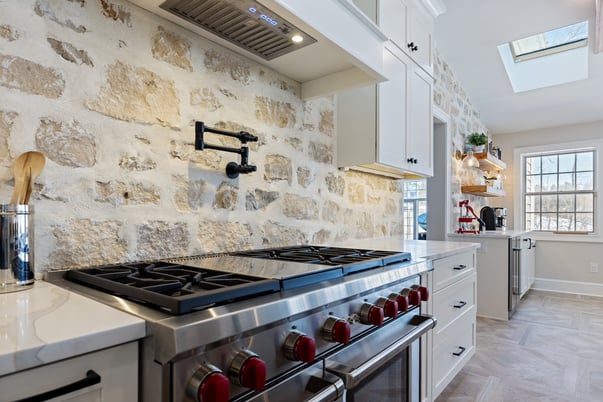 Before your first contractor meeting, create a full wishlist, including every countertop material, appliance brand, cabinet style, flooring preference, and lighting fixture you want. Then divide it into two columns:
- Must-Haves: Non-negotiables that define the project’s success for you (e.g., quartz countertops, a specific range, a kitchen island).
- Nice-to-Haves: Things you want but could defer to a future phase if the budget gets tight (e.g., under-cabinet lighting, heated floors, a pot filler).
- Phase 2 Items: Features better addressed in a follow-up project — often hardscaping, butler’s pantries, or adjacent room work.
This exercise does two things. First, it forces you to articulate your priorities before emotions and inspiration boards take over. Second, it gives your contractor a clear scope to quote accurately and a clear list of items to cut if value engineering becomes necessary.
3. Build a Rainy-Day Fund for Hidden Surprises
Rule of Thumb: Reserve approximately 10% of your project budget for newer homes in good condition and up to 20% for older homes or homes with more complex renovation needs.
Kitchen remodels are among the most complex renovations a homeowner can undertake. While the construction process is highly predictable, it's wise to maintain some flexibility in your budget for design upgrades, finish selections, scope adjustments, or other decisions that may arise during the project.
A contingency fund isn't about expecting problems. It's about giving yourself options and peace of mind throughout the remodeling process.
4. Understand Your Kitchen Remodel Financing Options
Most homeowners don’t write a single check for $75,000. Understanding your financing options and the real cost of each is part of building an honest budget.
Home Equity Loan
A lump-sum loan secured by your home’s equity, typically with a fixed interest rate. Interest may be tax-deductible if the funds are used for home improvements (consult a tax advisor). Best for homeowners with significant equity who want predictable monthly payments.
Home Equity Line of Credit (HELOC)
A revolving credit line secured by your equity — you draw what you need, when you need it. Useful for projects where costs come in phases. Rates are typically variable, so factor in rate movement risk.
Renovation Loan (e.g., RenoFi)
A newer category of loan that bases borrowing capacity on your home’s after-renovation value, not its current value. This is a significant advantage for homeowners who don’t yet have enough equity via traditional lending. Tilghman Builders partners with RenoFi to offer this option.
Cash-Out Refinancing
Replace your existing mortgage with a new, larger one and pocket the difference as cash. This can work well when current rates are favorable, but it adds closing costs and resets your loan term.
Always compare rates from at least three lenders before committing to any financing product. A 1% difference in interest rate on a $70,000 loan over 10 years is roughly $3,700 in additional interest paid.
5. Decide Whether to Stay or Temporarily Relocate During Construction
Kitchen remodels are among the most disruptive home renovations because they affect a space your family uses every day. While most homeowners choose to remain in their homes during construction, it's important to have a plan for how you'll cook, clean, and manage daily routines while your kitchen is out of service.
Before demolition begins, consider creating a temporary kitchen in another area of your home, such as a dining room, basement, or bonus room. Many families find success with a combination of a microwave, air fryer, coffee maker, mini-fridge, and portable countertop workspace.
You'll also want to think through practical details such as:
-
Where you'll prepare meals
-
Access to water for washing dishes
-
Food storage during construction
- How often you may need to eat out
At Tilghman Builders, we help homeowners prepare for the remodeling process and minimize disruption wherever possible. With thoughtful planning and realistic expectations, most families are able to remain comfortably in their homes throughout the renovation.

6. Track Every Cost in Real Time – Not at the End
Budget overruns rarely happen all at once. They happen one small decision at a time: upgrading to a larger range, choosing the tile that costs $4/square foot more, saying yes to a change order without fully understanding the cumulative cost.
Establish a tracking system before the project starts; a shared spreadsheet with your contractor works well. Log every approved cost and change order immediately. Review the running total against your budget weekly. The earlier you catch drift, the more options you have to rebalance.
Request a detailed line-item estimate from your contractor, broken down by trade (demo, framing, plumbing, electrical, cabinets, countertops, appliances, flooring, etc.). This gives you visibility into where money is going and makes it easier to make strategic cuts if needed.
7. Finalize All Decisions Before Construction Starts
Change orders, modifications to the original project scope after construction has begun, are the number one driver of kitchen remodel budget overruns.
When you change a cabinet pull selection after cabinets are ordered, or decide you want the island moved 18 inches after framing is done, the cost is almost never just the material cost. It cascades into labor, scheduling, and sometimes subcontractor remobilization fees.
The most effective protection against runaway change orders is completing your design selections before your contractor breaks ground. Work with your designer or design-build team to finalize every product selection, confirm lead times, and lock in the scope of work in writing.
The more completely you can answer “what exactly are we building?” before Day 1, the closer your final invoice will be to your original estimate.
- Cabinet style, finish, and hardware — fully specified and ordered before demo.
- Countertop material and edge profile selected; slab templated after cabinets are set.
- All appliances specified and delivery dates confirmed.
- Tile patterns and grout color finalized before the tile is ordered.
- Lighting fixtures and plumbing fixtures selected before rough-in.
Frequently Asked Questions
How much does a kitchen remodel cost in 2026?
In the greater Philadelphia area (Bucks County, Montgomery County), a kitchen remodel that keeps the existing footprint typically runs $75,000 to $150,000, depending on finishes. A full renovation with layout changes, wall removal, or plumbing relocation generally costs $150,000 to $200,000 or more.
National averages run somewhat lower, but labor and material costs in the PA/NJ market trend higher than the national median.
How much contingency should I budget for a kitchen remodel?
Industry standard is 10% to 20% of your total project budget. For a $100,000 remodel, that means keeping $10,000 to $20,000 in reserve. Use the higher end of that range for older homes (pre-1980), homes with known maintenance issues, or projects involving significant structural work.
What is the best financing option for a kitchen remodel?
The right choice depends on your equity position, credit, and timeline. Home equity loans offer fixed rates and potential tax deductibility. HELOCs provide draw flexibility. RenoFi renovation loans let you borrow against post-renovation value, useful if you haven’t yet built substantial equity. Always compare rates from multiple lenders before deciding.
What causes kitchen remodels to go over budget?
The most common causes are:
- Change orders (mid-project design changes that cascade through labor and materials)
- Hidden conditions discovered after demolition, like water damage or outdated electrical systems
- Selecting finishes without a locked-in budget per category
- Not having a contingency fund forces reactive decisions when surprises hit
How long does a kitchen remodel take?
A typical kitchen remodel takes 8 to 12+ weeks from demolition to final punch list, depending on scope and the availability of materials. Full renovations with structural work and custom cabinetry take longer than in-place refreshes.
Ready to Get Started on Your Kitchen Remodel Project?
We’d love to bring it to life! Contact us today to learn how we can help you achieve your dream kitchen in Eastern PA or Northern NJ. And if you’re looking for more tips, grab your copy of our free guide on creating your kitchen remodel wish list.