

Every business owner wants a team they can trust – but many unknowingly become the biggest bottleneck in their own company.
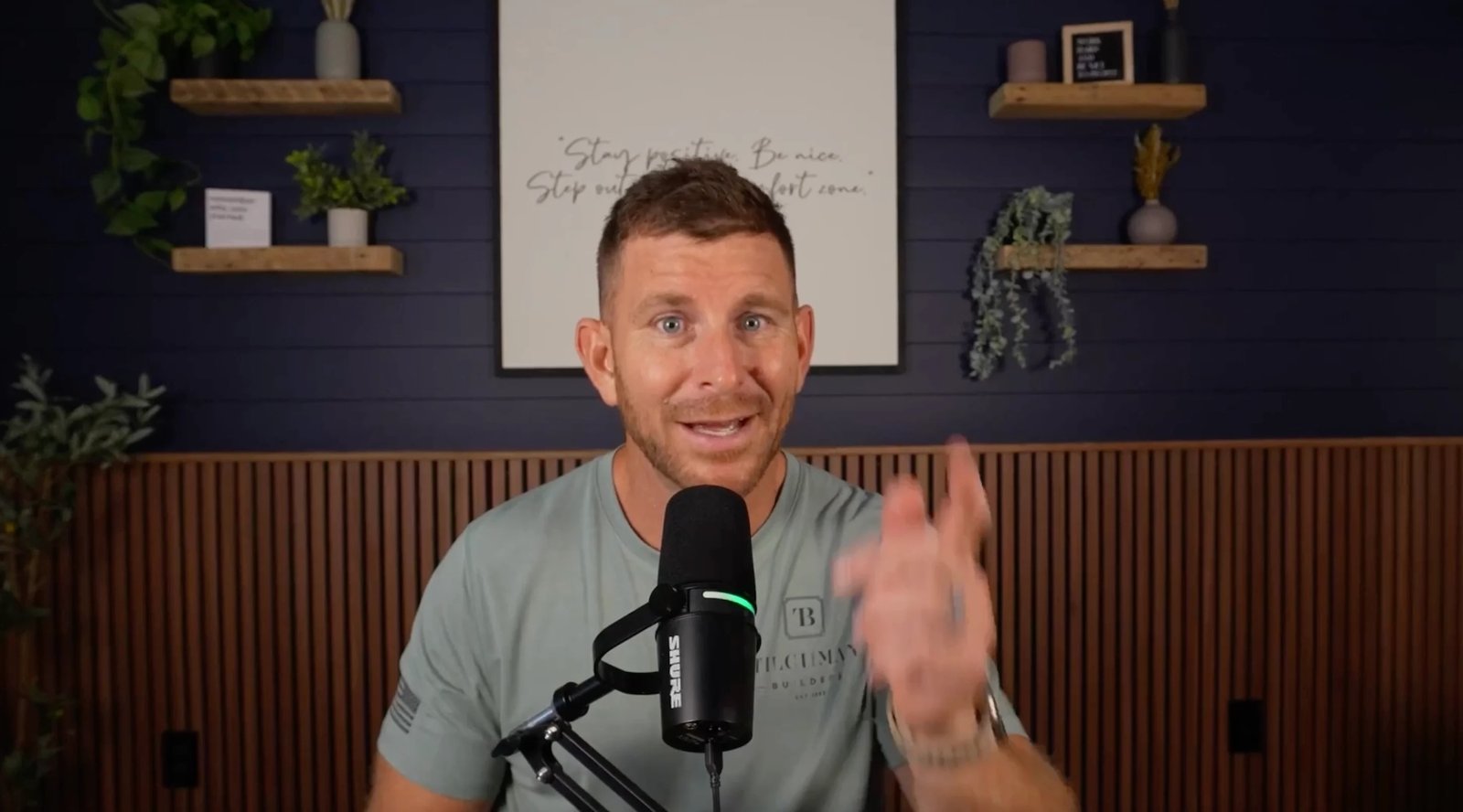
In this episode of Built Different, Eric Tilghman shares one of the hardest leadership lessons he's ever learned: every time you solve someone else's problem, you may be stealing their opportunity to grow.
After years of answering every phone call, making every decision, and becoming the hero of the company, Eric realized he wasn't building leaders – he was building dependence.
In this episode you'll learn:
-
Why leaders become bottlenecks
-
How answering every question hurts your team
-
The power of giving people ownership instead of instructions
-
How to create confident leaders inside your business
-
Why your job isn't to solve problems – it's to build people who solve them
Whether you lead a construction company, a small business, or any growing team, this episode will challenge the way you think about leadership, delegation, and growth.
WATCH HERE:
Follow and listen to other episodes here:
 |
 |
 |
Hi, everybody. Welcome back to another episode of the Built Different Podcast. I'm your host, Eric Tilghman, and the CEO of Tilghman Builders.
Tilghman Builders is a medium-sized residential remodeling construction company. We specialize in large-scale home renovations, additions, whole-house remodels, outdoor living, roofing, siding, windows, basements, bathrooms, I suppose.
But we specialize in large-scale, complicated projects. Anything that's in a home that's complicated and could easily go sideways, that's really where our team comes in. That's where our team shines.
A big part of what we offer is maintaining a good relationship while we're in somebody's home for three months, six months, nine months. It takes a special group of people, and it takes a good bit of coaching. What do people expect in their home? What's going to drive them nuts? All that kind of stuff.
So it's a complicated industry that we're in. There are a lot of things that our guys in the field need to know and a lot of things that the folks in this office need to know as well.
I think it's common in my industry for the owner or the leader, whether it's the CEO or the general manager—well, probably not. If a company has a general manager, they're probably structured in a way where they don't have this problem.
But I would say this is probably mainly geared toward the owner of a company.
We're kind of a medium-sized business, and I feel like a lot of contractors get stuck in that one-to-five-employee range. I think there's a good reason for it.
Anyway, one of the mistakes that I made over the years was trying to rescue everybody.
I had come in out of the field and decided I was going to shake up the business. I was going to help it grow. All of a sudden, I had a major shift in my life. I was a field member and a leader of my crew, but then I was in the office, and now I was a leader of the other crews as well.
Eventually, they would turn to me for answers, and I would give them to them.
It made me feel good.
I had to work really hard. I ended up having to work late almost every day and then Saturdays, but I really loved my role. I really loved stepping in. I felt like I was the man, you know? It felt good to be needed.
But what I was doing was creating a team that was dependent on me.
I didn't realize it at first. I didn't realize it for a while.
Pain makes change. Hopefully, this podcast helps somebody avoid making the same mistake that I've made and that so many countless business owners have made.
It feels good to be needed. I still get people walking into my office all the time, and the worst thing you can really do is just answer their question and solve their problem.
This episode is hopefully going to help you not do that.
I remember when I first stepped out of the field and into the office. I was the operations manager, and I became everybody's hero.
That was part of my identity.
I always answered the phone. I always gave good advice, and I always solved their problems.
I was pretty good at visualizing problems in the field. Sometimes we would FaceTime, but not all the time. Most of the time, there'd be a lead carpenter on the other end trying to describe something to me, and I got pretty good at visualizing their problem and solving it.
But I kind of painted myself into a corner.
It feeds your ego, for sure. If it wasn't for my life becoming completely unmanageable, I probably wouldn't have changed. I couldn't handle my workload without working weekends and 12-hour days.
Like I said, pain makes change.
That's exactly what pushed me to the inevitable outcome, which was realizing that I'm not involved in every decision. I'm not involved in the majority of the decisions that happen at the company every day.
Otherwise, you become a bottleneck.
In your company, you have every estimate, every client issue, every employee question, every change order, every conflict. There's just a lot.
There's a lot in any business. I only know construction, but there's a lot in construction. There's a lot that can go wrong. There's a lot that can be done just not quite right.
We still struggle with that today, but I've put people in positions of leadership where they now handle those things, and I trust them wholeheartedly.
In the beginning, I wanted the company to grow so badly, but it wasn't growing.
As long as I was the guy answering every question, it wasn't growing.
I really needed to step aside for myself, but also for others.
It was a really powerful shift.
Every time you solve someone's problem, you are also stealing from them.
That's an important point.
This ties in with culture because I've said in the past, "I will never clip the wings of anybody."
I want everybody to grow and reach their potential. Even if it means quitting this company and starting their own company, that's great. I encourage it, and I actually say it quite frequently to my team.
You can't just start a business with no experience. You'd have to first become a good leader, become comfortable in the industry, and all these things.
But another way that you can clip somebody's wings and prevent them from reaching their potential is by solving all of their problems.
You're stealing their confidence, ownership, and decision-making ability, which is a big one because that's a muscle that takes a little while to grow.
You're also robbing them of their opportunity to grow, period.
They need to become comfortable making decisions.
Every problem I solved was one less opportunity for someone else to become a better leader.
That's entirely true.
It wasn't until I really stopped answering the phone that the guys started stepping into their roles.
It's a loaded topic because I want my team to know that I'm there for them, and they do.
But I needed to stop answering the phone.
It was crazy. My phone was ringing off the hook. The guys were not being resourceful.
Oftentimes, I'd answer my phone and they would have a question: "Hey, are we reusing the gutters?"
Whatever the question was, I would say, "Did you read your proposal?"
Oftentimes the answer was, "Well, no."
The answer was in the proposal.
A lot of times, I would get a call that started with, "Hey, I know this is probably in the proposal, but just a real quick question."
Basically: "It's faster for me to call you than to read my proposal."
It took some time to reverse that, but eventually it did.
The way I handled it was that I stopped being available.
I think that's another side piece to this whole thing. As owners—and really as anybody—we have to protect our time.
I look through my whole team and think about even the youngest guy just sweeping the floor. We have to protect our time.
More than that, we have to protect our headspace.
We only have so much room in our brains.
Yes, we want to help people. That's why we're here. But we can't just empty our cup all day long and pour into other people. You'd be robbing yourself of precious life energy and your attention.
It wasn't until I learned about protecting my time and really setting boundaries that things changed.
That was what pushed me over the edge. What drove me was wanting a peaceful life.
I was good at doing my work, but I was spending so much time doing other people's work, too, and answering their questions—questions that either they already had the answer to or questions they were more than capable of deciding on themselves.
So I stopped answering my phone.
I would get countless calls throughout the morning. Then maybe around one o'clock, I'd call some people back.
Nine times out of ten, they would answer the phone and say, "Never mind. I figured it out."
Nine out of ten times, that was the answer they gave me.
That's when I realized: They don't actually need me. They can handle this.
And I needed to make them see that.
I asked them to be resourceful. I asked them to get better at making their own decisions. But it was hard for them to adjust to that.
So I ripped out the safety net.
I literally stopped answering my phone.
Sometimes I'd get calls in the afternoon, and I'd give them a call back at 4:30 at the end of the workday. They'd be on their drive home, and I'd often get the exact same response.
"Never mind. I figured it out."
The other thing that's worth mentioning is that if somebody has a last-minute question, that tells me that they're not planning properly.
I would expect a phone call at 3 p.m. about something they're going to be doing after lunch tomorrow.
That was how I handled it, and thank God I did.
Instead of answering people's questions, what can we do instead?
Not everybody on my team has the luxury of not answering their phone. Now, the guys in the field are trained well enough to know that they only call when they really need something.
JP's phone still rings quite a bit, and so does Derek's.
Derek is our project manager. JP is our operations manager. It's a similar job, but JP has more responsibilities outside of running projects.
When somebody comes to you with a question, instead of answering it, just say:
"What do you think?"
"What do you think we should do?"
That's one way to handle it.
Another way is to say, "Give me some solutions. What options have you considered? There have to be three answers here. What do you already have for me?"
That's something we trained our guys to start doing.
Don't come to me with a problem without already having two or three solutions.
It gets them exercising that muscle.
Another thing you can say is:
"If I wasn't here today, what would you do?"
There's a huge distinction here.
We want to give away responsibility, but we also want to give away ownership.
"You own this."
We do that constantly. We live that way in the office.
I've built departments and then had to hand off responsibility for those departments.
JP is responsible for the operations department, which includes him and Derek, the eight lead carpenters, and all of the carpenters below them.
Sink or swim, succeed or fail, it is his responsibility.
But it took a while to get there.
At first, I felt the need to micromanage.
I was scared. I was worried.
"Only I can do this job."
"Nobody can handle the culture as well as I can."
"The guys like me. What if they don't like you, JP?"
"I'm really good at writing emails. I'm not so sure about you."
We have this head trash.
We think we're the only ones who can do a job as well as we can.
What I've found pretty much every single time is that they not only do it as well, they do it better.
I think that starts by giving ownership 100%.
I was looking over JP's shoulder, monitoring every email and asking him to copy me on every email in the beginning.
But what a gift it was for JP when I eventually said:
"Hey, JP, remember when I told you to copy me on every email? Well, you've done a really good job. I trust you wholeheartedly. This department is yours. I'm here when you need me."
I gave him a few things that were important to me, like communicating frequently and clearly with clients and team members.
And obviously, culture.
That was always a big thing. That was what I was most worried about.
And he's better at that, too.
I'm kind of the feel-good guy. I'm the fun one. I like to laugh, joke, and compliment people.
JP does all those things, too. He just does them differently than I do.
But he has created accountability in the field, which is something I wasn't doing as well as he does. He does a wonderful job at that.
We make a good team in that way.
Giving him ownership was really important.
Until then, I was clipping his wings 100%.
The culture and the operations department did not take off until after I gave him full ownership.
Leading up to the point where I was comfortable giving him ownership, I told him, "The goal is for me to give you full ownership of this."
I didn't hide that from him.
I said, "Hey, look, man. I think you're the right guy. I'm not ready yet, but what does success look like to me? It looks like you talking to me only one time a week. Other than that, you run the department. You run the play. I trust you, and I trust that you'll make improvements that I couldn't see."
He's done exactly that.
When we're giving away responsibility, let's bring it down to a smaller scale.
Let's not hand off an entire operations department right now.
Maybe somebody's going to install their first kitchen on their own.
Instead of saying, "Can you do this?" say:
"This is yours now."
"You've got this."
"This is 100% yours."
Ownership really changes people.
I've seen it time and time again.
I've seen people really struggle in their roles many, many times.
You never know how long it's going to take for somebody to get used to a new role. Sometimes you have to pull them out. Sometimes it's not the right person.
But I've seen many instances where all they needed was ownership.
They needed me to back off.
They needed me to say, "Hey, man, I trust you."
It starts slowly.
Maybe somebody says, "Eric, what do you think about this?"
At first, you say, "Well, I would do this. I would do that."
Then, slowly, maybe you're forced into it. Maybe you're busy in that moment and it's time-sensitive, and you just say:
"You know what, man? You've shown me enough. I trust you. I trust that you did it the way we've always done it. You've got this. Go ahead and send it."
Then it works out.
They feel good, and you're learning, "My gosh, nothing bad happened. I trusted him, and nothing bad happened."
It's a learning curve for both people.
One person needs self-confidence.
The other person—in this story, me—needs confidence in them.
I need to trust other people.
There was a time when I was in the field when I thought nobody could make a cut as well as me.
I was the best lead carpenter. I worked the fastest. I walked the fastest. I thought the fastest. I made decisions the fastest. I made the cleanest cuts the fastest.
I thought pretty highly of myself for a while.
Then I was confronted by all of my team members, who basically said:
"Look, man, you're a terrible leader. We all hate working with you. We're here to hopefully salvage the relationship and let you know you're not being good to us."
And I wasn't.
I wasn't being good to them.
They let me down a little bit here and there, but I got better at leadership, and I got better at trusting.
I look at our best clients and then our more difficult clients.
Our best clients let go and trust.
It's faith, right?
Anybody out there who's a follower of Jesus knows that we have to let go and trust.
Some of our clients who don't let go and trust our process and team members will sometimes go against the grain and make things messier than they need to be.
And that's okay. We still learn from those experiences, and we're trying to navigate those types of personalities.
But I needed to let go.
I needed to let go and trust.
That's when my leadership really changed.
Here's a big one:
You need to let people struggle a little bit.
If I came to work and somebody made every decision for me, I would go home.
I wouldn't feel fulfilled. I wouldn't feel like a man. I wouldn't feel like a contributor.
I'd feel like I had my hands tied. I'd feel worried and scared. I'd feel like I was walking on eggshells and couldn't do anything right.
I often relate leadership to fatherhood because they are so similar.
I am the leader of my family, at least in some areas. My wife leads us in others.
I've always said the hardest part about parenting for me would be letting my kids struggle.
I learned so many big lessons by hanging out with the wrong crowd, going over someone's house, having an embarrassing situation—whatever it was.
Being a kid is tough.
It's going to be really hard for me to watch my kids go through some of the same difficult times that I went through.
But leadership is no different.
Leadership in a company is no different.
We need our team members to go through that struggle.
They need to.
We can't rescue our children every time they're struggling with something.
If I'm trying to teach my son how to take a key off a key ring—my middle guy, Hayes, just turned seven—and I start explaining how to do it and he starts trying, I can't take the keys away and say:
"No, no, no. Here, let me do it."
I have to let him struggle.
Then he knows how to do that thing forever.
We don't want to let people fail catastrophically, but we need them to think. We need them to wrestle. We need them to own their own outcomes and grow their lives.
That's so important.
What changed at Tilghman was lead carpenters making decisions, project managers owning client relationships, and Sean, our punch list and warranty guy, owning that department.
He struggled for a little bit.
It wasn't until JP and I looked him in the eye and said:
"Hey, man, we put you here because we think you're the right guy. We still feel that way. I know you're struggling. I know this is new to you, and I know it's uncomfortable, but we still think you're the right guy.
"I want you to know that. Sink or swim, this is your department.
"You've got this, man.
"I want you to look back in six months or a year and be really proud of how you've structured this department."
This was a new department. We didn't have structure in this department.
We wanted to take some of the workload off JP, who had been handling all the punch list and warranty work up until that point. It was very time-consuming. He was missing the mark because it was just too much.
So we created this position in a brand-new department that had never existed before.
We gave Sean the general guidelines and the things that are important to us: answering emails responsively, structuring your day, structuring your week, managing your time.
Sean was coming from a field position.
We told him, "Look, you're going to have to structure this entire department, and it's going to take time."
Sean is a great example of owning a department.
Jay is another one.
Jay is our senior estimator, and estimating is very hard. It's not an easy job. It's taxing on the mind.
You're sitting at a desk staring at a spreadsheet all day long, and it's really challenging.
It's not always so rewarding.
I gave him ownership of the department.
I said, "Jay, this is yours, man. I want you to train. I want you to support your people. I want you to laugh. I want you to bring good energy to the people in this department."
The culture has to be the same in all departments. It has to be good.
I gave him ownership of that.
And here we are, three to six months later, and it's better than it ever was because he was given ownership.
The goal is not for everybody to need me.
Remember, that's where this started.
Before that, everybody needed Bob, my dad.
What I've seen in this company over the last five or six years is that I'll go into a department. I'll essentially become that department, really master it, figure it out, set up some efficiencies, and then train somebody to do it.
Then I go into a different department and do the same thing.
That has happened time and time again.
But we would not be where we are if people were still coming to me with every problem.
Sometimes somebody will come to me with a problem, and I'll just push them away.
I'll say:
"I'm sorry, but I should not be involved in this. I shouldn't get involved."
This is my company and I'm the leader here, so in a sense all problems are my fault.
But sometimes, if I get involved in a situation, I make the situation messier.
Maybe an unhappy customer calls me. We talk. We figure it out. I apologize if needed—and usually it is.
Then I go talk to the people who can actually fix the problem.
Because that's not me.
I can help the people who can help the situation.
Your job is not to solve problems.
Your job is to build people who solve problems.
Let me say that again:
Your job is not to solve problems. Your job is to build and encourage the people who solve the problems.
They need support.
They need clear direction and clear expectations.
They need values to live by and a mission to strive for.
But we're building people.
I shouldn't be solving operations issues at this point.
If there's a glitch in our system, I love solving problems like that.
But if somebody nailed the crown molding up the wrong way, that's not for me. That's for somebody else.
And that's only possible because I stopped answering the phone four, five, six years ago.
I stopped answering lead carpenters' calls.
Without that extra time, we couldn't have built the business.
We could not have gotten to where we are today.
I want any business owner out there who's watching this to hear this.
If you're struggling to break through that barrier, I recently talked to a painter who's a friend of mine.
I was asking him, "What do you want to do with the company? How big are you getting? What's your plan for this year?"
He's struggling to find good help and all of that.
I know how he feels.
He feels like he needs to be there for every decision and every coat of paint.
But it's just not true.
People want to reach their own potential.
Most people are capable of a lot more than what they're being asked to do.
It's not a selfish thing. It's for them, too.
People want to grow. People want to reach their potential. And they want to make more money.
So if you're exhausted, if everyone depends on you, if your phone never stops ringing, that might not be proof that you're a great leader.
That does not make you a great leader.
It might be proof that you're standing in the way of your team's growth.
We want to build leaders.
We want to give away responsibility.
Stop being the hero.
It feels good, but only for so long.
Eventually, it stops feeling good and becomes something you resent.
I certainly did.
I was resenting everybody who called me.
I really needed that to stop because I love these guys, and I know they love me, too.
But I was a crutch for them.
I was not helping them.
The strongest organizations aren't built around one indispensable person.
They're built by ordinary people who were trusted with extraordinary responsibility.
Here's what I want to say:
Even Jesus didn't try to do it himself, right?
He had 12 disciples whom he taught, and then he sent them out on their own mission.
But they wouldn't have known the mission without hearing Jesus' vision.
The leader gives the vision and teaches, and then the disciples carry out the mission.
Leadership is not about being the center of every solution.
It's about preparing others to carry the mission forward.
This topic might be a little bit less directly about culture, but you can imagine how it affects your culture.
I described the resentment that I had toward some of the team members.
But it's also about their growth.
We want our people to love their jobs.
In 10 years, I want somebody to quit my company to go start their own company.
I want them to say:
"Eric, thank you. I could have never done this without your leadership and without your guidance."
Awesome.
That's great.
That person is going to be a friend forever.
Hopefully they pass me in business and can help me through my stuff.
There cannot be a scarcity mindset.
So many of our beliefs as people—not just in business—limit us.
You can have a paradigm shift.
There's a reason why some people are wealthy and some people stay stuck.
There's a reason why some people have a lot of traffic violations and others have zero.
I don't have traffic violations, but I also don't drive the speed limit.
There is something in our brain that creates our reality.
I've seen so many personalities come through this business and through my own personal life that I'm able to see that what we think about, we bring about.
If anybody out there is saying to themselves:
"Eric, you don't understand. I'm telling you, my guys aren't good enough. They really let me down."
I would beg you to look at yourself.
Look at your leadership.
How are you delegating?
How clear is your communication?
Once I started blaming every single thing on myself, my life really improved, and certainly the business did as well.
All the answers lie within us, and we can control certain outcomes by really wanting to know:
Why did this happen?
What could I have done differently?
I hope that resonated with somebody.
Again, the purpose of this podcast is to spread the word that company culture matters.
The way we talk to each other, treat each other, and encourage each other matters.
The way we conduct ourselves in business really, really matters.
I think it's easy to say at this point that a company can become more profitable through company culture.
It really works.
And it also feels good.
I'm trying to spread the word.
I'm trying to change the construction industry standard and what it means to be a contractor.
Everything got a hell of a lot easier once I started loving my people.
And I do.
I love them. I care about them.
Some days are easier than others, but I will never stop trying.
If you're a business owner or a leader of a department, or whatever it may be, I hope you can see the value in just doing the right thing and caring for our people as if they're our children.
There are too many similarities between leadership and fatherhood.
I'm prepared to die on that hill.
That's what this podcast is about.
I hope I encourage others to run their businesses in a similar way.
And I think that's it for today.
As always, thank you for staying tuned.
Stay positive, be nice, and step out of your comfort zone.
Bye.