

Most businesses say culture matters. Very few intentionally build it.
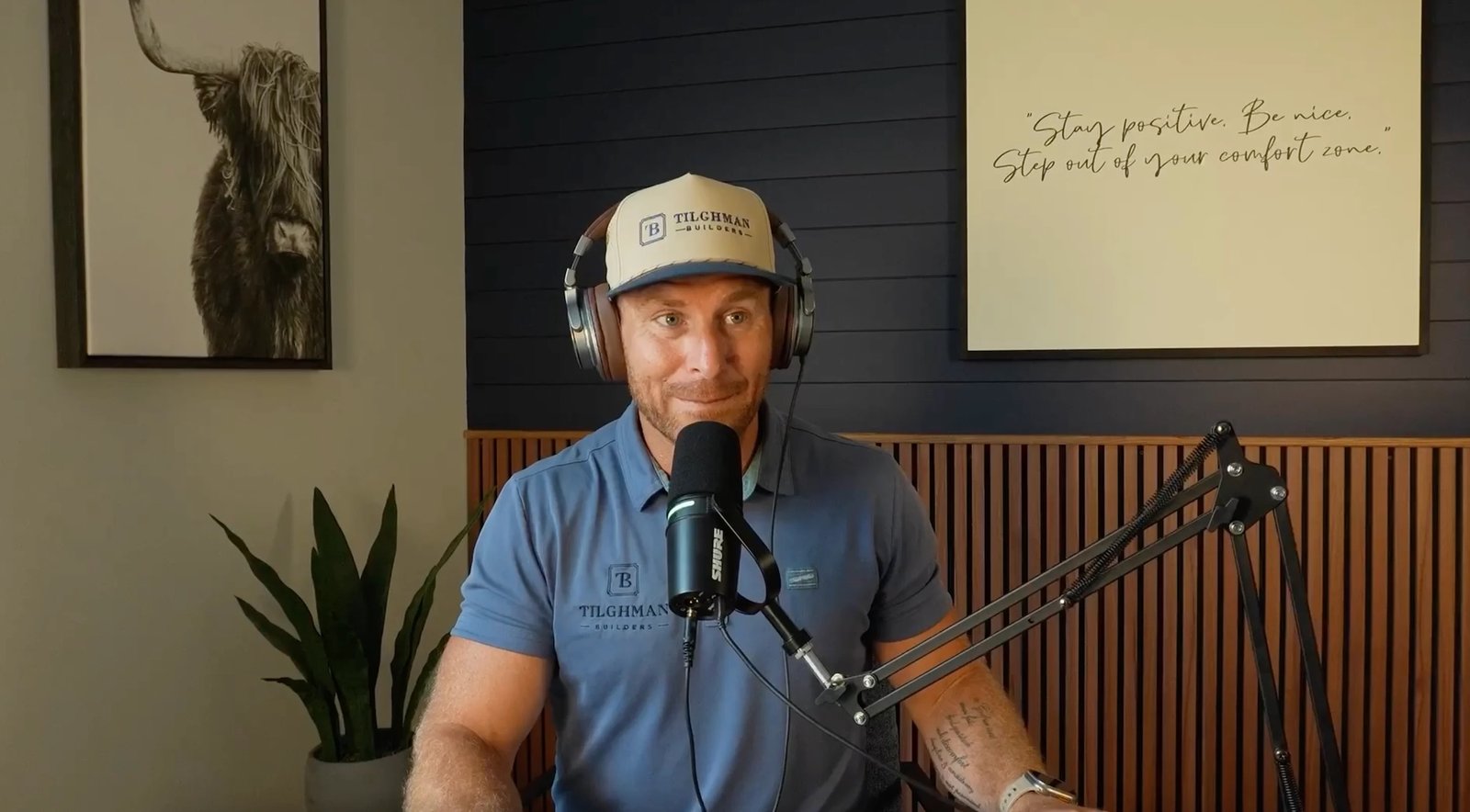
In this episode of the Built Different Podcast, Eric Tilghman shares one of the simplest – and most powerful – leadership practices that transformed the culture at Tilghman Builders.
What started as a weekly email eventually evolved into "Shout Out
Popcorn," a monthly team tradition where employees publicly recognize
one another for excellence, growth, teamwork, and character.
Eric explains why recognition from peers often carries more weight than
recognition from leadership, how this simple practice strengthened
relationships across the company, and why maintaining culture requires
constant attention – not just good intentions.
If you're a business owner, manager, team leader, or anyone responsible for building people, this episode offers a practical idea you can implement immediately.
In this episode:
-
Why company culture requires constant maintenance
-
The story behind "Shout Out Popcorn"
-
How peer recognition transforms teams
-
Why great culture is built through small habits
-
Leadership lessons from Tilghman Builders
WATCH HERE:
Follow and listen to other episodes here:
 |
 |
 |
Hi, everyone. Welcome back to another episode of the Built Different Podcast. My name is Eric Tilghman, your host and the CEO of Tilghman Builders. We are based out of Hatboro, Pennsylvania, and we are a family business that has been operating for more than 40 years. We are looking to change the construction industry standard and redefine what it means to be a contractor, especially with regard to company culture.
I really like today's episode. It is going to be pretty sweet and something a little different for you. Every organization has a culture, whether it is good or bad. I have talked about township buildings. They certainly have a culture. Tech companies, food stores, Chick-fil-A, Starbucks—everybody has a culture. Whether it is healthy or unhealthy, that culture exists.
Today, I want to dig deeper into culture. That is what we do on this podcast. We try to convince other contractors, industry leaders, and team leaders to focus on company culture, relationships, and accountability. How do we work here? How do we behave? How do we treat one another? That is the goal of the podcast.
Tilghman Builders started in 1982, so we have always had a culture because there has always been more than one person in the company. I lived within that company culture for many years, and it was fine. It was a construction company. There were guys I did not care for and guys who did not care for me. Cliques formed. A couple of guys did not like one person, nobody liked another person, and everybody liked someone who only liked half the group.
That is normal. People gossip when someone is not around and play nicely in the sandbox when that person is present. In some cases, people walk on eggshells around certain coworkers. This is probably normal in many industries, but it is definitely normal in construction.
We did not love Mondays. Who would want to come into an environment like that? We looked forward to Fridays, but we always got the job done, and we had fun. Joking around, teasing, and messing with one another can be a big part of construction and any healthy culture. But first, there has to be a bridge of love.
If I do not talk to a friend for a year and then send him a text making fun of him, that is not great. But if we have built a bridge of trust and I talk to him multiple times a week, I can get away with it. He probably loves it because it is part of our friendship. You have to build that bridge first—a bridge of compliments, trust, and love. It sounds funny coming from someone who works in construction, but we have love here, and that is really important.
I always wondered what we could achieve if we all got along, shared a common mission, and stopped hiring a bad egg simply because he was a skilled carpenter. We have hired plenty of people like that. You say, “Yes, he is kind of a jerk, but we need him,” or, “We have a big project coming up,” or, “We do not know much about roofing and siding, and he is very skilled at that.” You let people onto your team who are not congruent with your values, and that is a big problem.
I imagined what we could achieve if we stopped doing that, stopped laying people off in the winter, and rejected the usual industry norms. I put all my eggs in one basket: the culture basket.
About six years ago, when I was the operations manager, I began sending an email every Friday. In each email, I outlined the following week and highlighted displays of excellence from the current week. At the time, the culture was what I already described: gossip and a group of seven or ten guys who got along simply to get along. It was not terrible, but it was not great. It was normal.
I started sending these shout-outs, and it felt like I was sending them into the abyss. Nobody responded to my emails. But I believed a strong culture was possible, and I kept thinking about what we might achieve if we built one. I thought, “Who better than me to really go for this?”
I sent those shout-outs into the abyss for a year, a year and a half, then two years. About two and a half years in, I received an email in the middle of the week from someone on my team. It was sent to the whole team and had the subject line “Midweek Shout-Out.”
The message said something like, “I just want to shout out Dave for teaching me how to do built-ins this week. I had a great time working with you, I learned a lot, and I really value our friendship.” It was one construction guy writing that to another construction guy.
It was amazing. That was the first time I realized the work was starting to take hold. The team was beginning to feel the impact of saying kind things to one another—of offering words of encouragement. That midweek shout-out changed everything. From that point on, I knew we were on the right track.
The practice continued to evolve. I kept including shout-outs in my weekly emails. Then JP took over operations, so I lost control of those emails. His messages were excellent and probably better suited for that time, but the shout-outs began to slip.
We decided to include them in our monthly team meeting. We meet once a month for two hours, and I asked everyone to send me their shout-outs anonymously. Steve might shout out John. Malcolm might shout out Zachary. Samuel might shout out Chad. Some guys would recognize four people at once. Field employees could recognize people in the office, and office employees could recognize people in the field.
Sometimes, I had to pull the shout-outs out of people. I would say, “Tomorrow is the team meeting, and I only have seven shout-outs. Come on. I know you guys love each other. This is your chance to tell your brother that you love him. Just do it. You know you want to.”
Slowly but surely, the messages would come in, usually at the last minute before the meeting. I would print them and read them aloud at the beginning of the meeting.
A few members of our team speak English as their second, third, fourth, or even fifth language. Those shout-outs were always fun because I read them verbatim. The phrasing could be broken English, but everyone was a good sport, and those messages often got the team laughing. Some of the guys also submitted silly shout-outs, which added to the fun.
Eventually, I got tired of reading all of them, so we came up with “Shout-Out Popcorn.” In reading or English class, one student reads a paragraph and then “popcorns” another student, who reads the next one. We applied that idea to the shout-outs. One person would recognize someone, then the recognition would bounce around the room from person to person. That became Shout-Out Popcorn, and we have been doing it ever since.
Today, we have a great culture. We really do. But culture always struggles in some area. A team may be too soft or too rough, too focused or having too much fun. Right now, in my opinion, we have been lacking some accountability. My point is that culture is never perfect. It always requires maintenance.
That is what our team meetings are for. We decide on the topic or theme of each meeting, and I view the shout-outs as part of that maintenance. At this point, the guys enjoy doing them. It feels good to be recognized.
We recorded our most recent team meeting, which happened about a week ago, so you could see what Shout-Out Popcorn looks like. I hope you enjoy it.
[TEAM MEETING CLIP]
ERIC TILGHMAN:
All right, guys. Welcome back. I am still the CEO of Tilghman Builders, and I am still your host for this podcast. I hope you enjoyed that and thought it was neat. I hope you saw something unique that you would not necessarily expect in a construction company. We think it is unique too, which is why we wanted to share it with you.
The power of recognition is huge. You expect recognition from your leaders when you do something right or wrong. We expect it from our parents, and our children expect it from us. But it is rare to receive recognition from people who are your equals.
Sometimes, that recognition means even more because, in many industries, people undercut one another. If two people are paid the same amount, are the same age, and are competing for the same position, one of them may not compliment the other to the boss.
What we have here is really special. Today, we have a very healthy culture, but we did not always. I wanted to create something great and noticeably different. I wanted to build a place where people loved to work.
Everybody on our team loves their job. Nobody quits this company. It is amazing that we have arrived where we are, and I am incredibly grateful.
I truly believe the only way to achieve anything great is through people, collaboration, cooperation, and care. It is very difficult to get 40 guys and one gal to cooperate with one another.
Our industry is challenging. We face difficult problems, danger, and safety risks. The work is hot, freezing cold, dirty, and dangerous. That is where care comes in. When your team feels that you care about them—and that the entire team cares about them—they behave differently.
Everybody wants to be part of a team, and everybody wants to be part of a winning team. At this point, we have 40 people who love their jobs and support one another. I mean that. Everybody on my team would agree with what I am about to say: I genuinely care about everyone on my team.
They would not only agree that I feel that way; they would say the same thing about themselves. They care about everyone on the team. There are quite a few people on my team whom I genuinely love. I care about them that much.
It is a beautiful thing, and without it, there is no way we could show up the way we do for one another or for our clients. We tried the other way for a long time. I was part of a culture that was fine. It was normal. It was construction.
Now, we have this. We realize that two things can be true at once. We can work in a tough, rough, and rugged industry like construction, and we can still be nice to one another. We can be smart, creative, and uplifting.
If you are looking to scale your business or achieve an impossible goal, find the right people, share the vision, and then maintain the culture. That is what these shout-outs do for us.
Whether you own a construction company, work in another industry, or lead a small, medium-sized, or large team, consider trying Shout-Out Popcorn. I think it is one of the key practices that helped us get where we are today.
I hope everybody enjoyed today’s podcast. As always, thank you for staying tuned. Stay positive, be nice, and step out of your comfort zone. Bye.