


What can baseball teach us about building a great company culture? Turns out—a lot.
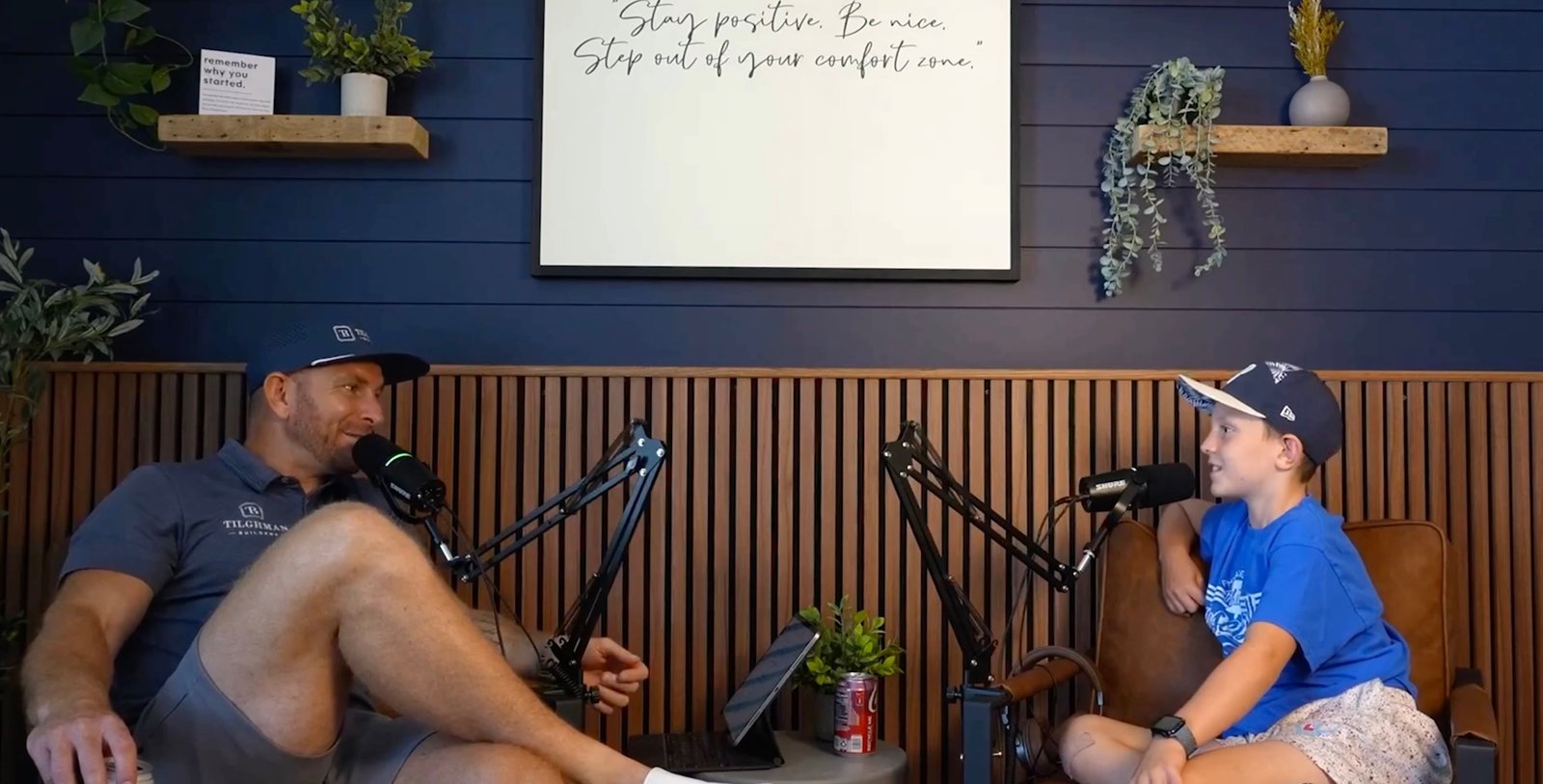
In this episode of Built Different, Eric Tilghman is joined by a very special guest: his son, Crew. As a passionate baseball fan and player, Crew brings a fresh perspective to a conversation about what separates a collection of talented individuals from a team that actually wins.
Using baseball as the backdrop, Eric and Crew explore the parallels between the clubhouse and the workplace – from teammates supporting each other after a strikeout to leaders holding people accountable, giving honest feedback, creating momentum, and making sure everyone understands their role.
Together, they break down five pillars of a great culture: relationships, accountability, feedback, momentum, and winning.
They also discuss why talent alone isn't enough, how one person's attitude can change an entire team, why great leaders need to be both encouraging and honest, and why profitability—just like winning in baseball—is necessary to keep investing in great people and building something better.
Whether you're leading a company, coaching a team, raising a family, or simply trying to become a better teammate, the lesson is the same: Talent gets you noticed. Culture wins championships.
And sometimes the best lessons about leadership come from sitting down and talking baseball with your son.
WATCH HERE:
Follow and listen to other episodes here:
 |
 |
 |
You got some guys that are really talented, but there, because they're so naturally talented, they don't try as hard.
And they get by because they're so talented. Meanwhile, you have somebody else who's less talented over here, but they try really, really hard. Eventually they could pass the talented guy because they have mental fortitude and self-belief and stuff like that. So. Yeah, that's a good, good example. Like, so the more talented team got beat because they let their talent get to their head.
They got cocky. Yeah. Right. Yeah. Well good. I like when that happens. So, a business takeaway here would be that talent gets you noticed. Culture wins championships.
And.
Hi, everybody. Welcome back to another episode of the Built Different Podcast. I'm your host, and the CEO of Tilghman Builders. Just a reminder that the, the purpose of this podcast is to is to kind of spread the word about company culture and the importance that it has on our companies and to hopefully encourage other business owners to run their companies in a similar way.
And so, there's a lot of similarities I've noticed as I've, as we've, we've been kind of watching baseball for the last few years in our house. There's a lot of there's a lot of takeaways when it comes to company culture. I'm always looking at sports teams as kind of a good, representation of, of company culture.
And so, who I have here with me today is a baseball expert. He's very close to me. And, I'm just grateful to have him on the podcast. With me here to, to kind of talk about baseball culture and, and how it affects the performance of the team. So, with me is my son, my oldest son.
Crew Tilghman. Crew. Welcome to the podcast.
Thanks. Thanks. It's good to be here. Good to be here. All right. You good? Yeah. Okay, cool. Cool. So, So, anyway, guys, this is. This is crew. He's my oldest son. He absolutely loves baseball. Knows everything about it. He's got a photographic memory. He memorizes all the stats. It's a it's an obsession. Overnight, about three years ago, he just started loving baseball.
Maybe four years ago. And, And ever since then, we've watched every Phillies game just about, it's it's become quite, a, quite part of quite a part of our family. Dynamic. And then the time that we're not watching the Phillies, we're spending it at cruise travel baseball games. And God bless his younger brother and younger sister, who just kind of come around with us and forced to also watch baseball.
So, how are you doing today, crew? I'm good. How are you? I'm good, I'm good. So, how long have you been a Phillies fan? Three years, three and a half years. Okay. Three and a half years. It sounds about right.
Do you think you know more about the Phillies or baseball than your dad does? Yeah, probably. Yeah, you're probably right. Well, you're definitely right. He's definitely right. And who's your favorite? Philly. And why? I like Sanchez. Like Sanchez. I wasn't expecting you to say that. Why is that? He just good. And he's nice. Okay. He's good, and he's nice.
And he's always fired up. And he's always fired up. All right. Sweet. And he's actually happy to be on, like, on the team and on the mound and. Yeah. Okay. How do you how can you tell that he's happy? He just shows it on shows. It shows it. Okay, cool. Cool. Pull that, like, real close to you. Hey, you gotta pull it down.
Like, pull it down, and there you go. That's good. And then chill. Chill and relax. You're comfortable? Yeah. All right. Good. All right, so if you could build the perfect baseball team, what's more important? The best players or players who work well together. Who work well together? Yeah. Why is that? I mean, if you're if you work well together, you have a better team than if you have your team, you succeed.
Okay. Yeah. Yeah. That's true. Because it's not a one man sport, right? It's almost 26. Man's boy. Yeah. What about a marathon runner? What would be better to have him be a nice teammate? Or for him to just be just hard nosed talent? I don't know. Just talent. Right. Just him out there running. So. But when we're talking about a team, it requires a different type of person.
Right. Yeah. Cool. Okay. So can one superstar carry the team? Sometimes. But sometimes not. Give me an example of one that has, I mean.
Probably Ohtani has, but there isn't many others a Tommy. Yeah, well, they got Max Muncy on their team two. Right. Yeah. Is that his name? Max. Max? Yeah. I mean, he's he's a hitter. Yeah. He can. You told me last night because we did. We lose. Yeah. We lost. We lost to them. But during the game, while we were playing monopoly, you told me that he stinks at fielding.
He. Max Muncy. Okay, well, hopefully he's not watching this. Okay. Well, I think there's probably other good players on the on the Dodgers. Right? Yeah. Like Newquay. Yeah. Kyle Tucker. Yeah. Yeah. It's rare that a that just one player could carry a team. You know what I mean. One player can contribute more than the rest and really help.
But the team is required. So, Let's see. Have you ever seen a player that was, like, really good, but seemed bad for the team? Yeah. Sort of. Give me. Who is it? Give me an example. Like me. Oh, yeah. I don't know him. Manny Machado with team. Padres. Padres? Yeah. What position? Third base. Third base.
Power hitter or no? Kind of. Okay. Consistent hitter. This year? No. This year? No. Okay. He's getting what he deserves. Yeah. Because he wasn't. He isn't really nice. He's not nice. What does he do? This one year, he, like, slid into. It was like a he like, it was like, sliding into a base and the like the shortstop, he was, he slid into him into, like, his shin on purpose.
Yeah. Yeah. That's not a very nice what comes around. And now he's having a stinky season He does like other things too. He does other things. Yeah. Like what. Oh no. He's just like he like talks bad. He's just kind of mean. Yeah. Yeah. That's fine. That's a good answer. Some. Sometimes people are just mean, right?
All right. Cool. Let's see. Okay. Well, okay. I like this question. Why do some teams beat less talented teams? I'm sorry. Why do some teams that have less talent beat a better team? I feel like sometimes they're not trying. Okay. Yeah. Yeah. Yeah. You think this is so bad? They don't even try. Yeah. Nice. Was there?
So that's. That can happen. So, So some some would argue. I certainly fall into this. I'm not the most skilled person in the world. I'm not the most talented at really anything, but I. I can work really hard. I try really hard at whatever I do. So, you got some guys that are really talented, but there, because they're so naturally talented, they don't try as hard.
And they get by because they're so talented. Meanwhile, you have somebody else who's less talented over here, but they try really, really hard. Eventually they could pass the talented guy because they have mental fortitude and self-belief and stuff like that. So. Yeah, that's a good, good example. Like, so the more talented team got beat because they let their talent get to their head.
They got cocky. Yeah. Right. Yeah. Well good. I like when that happens. So, a business takeaway here would be that talent gets you noticed. Culture wins championships. Do you remember when we went to that playoff game for the Phillies? Yeah. Who did we play? Braves. Did we win? Yeah. We clobbered them, right? It was like.
It was like a home run derby. We had like, six home runs. Yeah, that was awesome. Yeah, that was awesome. What did it feel like? Walking in to Citizens Bank Park that night? It was really loud. It was really loud. Yeah. Good answer. People were amped up, right? People were excited. I think the fills were excited, too.
Yeah. Yeah, I bet they were. Yeah. Do you, do you you. It was a couple years ago. Do you remember. Do you remember noticing the players, like looking different or acting different or anything like that? They were just having fun. Just having fun. Awesome. Okay. Well, we'll get to having fun soon. Do you think that they thought they were going to win?
Yes, I think so. Good. Good. That whole, that whole sort of season. That season. I want to, I want to stay on that season because that, that was, that was when I actually brought to my team at work here. The similarities between the, the Phillies' culture and our culture. Just because that season, the team's culture was so good.
Yeah. Right. Like, it was like, dude, they were all buds, right? They were all friends. They, And they were all killing it. Yeah. And, like, what's better than having fun? Winning? Like, what's more fun than fun is fun. Winning is more fun than fun is fun. Right, you guys, you and your boys on your baseball team.
You guys could goof off all you want in the dugout. And that's like, this level of fun. Goofing off, not paying attention, not listening to the coach. But like, you are being silly and like you're spitting sunflower seeds at each other or whatever you guys do in there. Nobody knows, by the way, what nine year olds do in their baseball dugout.
It's kind of a weird part about being a baseball parent is like, you're just hiding from us for two hours and dugout. We have no idea what you do. But anyway, spitting sunflower seeds, cracking jokes. Not paying attention to the game. That's fun. Yeah. But being focused and winning the game, charging the field and tackling your. Your last batter, who, you know, hit the whatever.
This the game winning run. Yeah. That's more fun, right? Yeah. So fun is always fun. But winning is sometimes more fun than funniest fun. I just felt like, that season, the guys were, they were just killing it together. Weren't they on fire? They were the best team in baseball for a long time that season.
Right? No, no. They kind of came back. They came back. They're terrible. They came back? Yeah. That's so sweet. What do you think changed? Why did they come back? I mean, they went from being terrible to being good. They weren't even having fun. And like, April to May. Yeah. Drew knows just so much fun. Yeah. Yeah.
Yeah. I mean, you know, when you're losing like that and nobody's playing well, it's frustrating. And when you're frustrated, you're you're not being as nice to your teammates. They're not being as nice to you. Everybody's just kind of mad. Yeah. You know, hard to play when you're mad, right. Yeah. Yeah. That season was just cool. You know they just really seemed to be jiving.
You know they, they all seemed to support each other. They must have had some kind of talk. Right. They went from losing to winning. They must have had some sort of talk like hey fellas, like, look, you're not doing well at the plate. You're doing bad in right field. Like, come on, guys, like, we need to. And I'm not doing good at shortstop.
Right. I missed the two plays to first. Blah. Right. Whatever it is, we have to, like, own our mistakes, right? Yeah, and we have to talk about them. Yeah. Well, that was a fun game to be. Be at that stadium was wild. Yeah. Yeah. Was that game two of the series against the Braves? That was game number three.
Game three. Yeah. We ended up losing that series, right? No, we want that one. We lost the next one to the dying Simon. Back. Okay. All right. Cool. Oh my gosh. So anything. Realized my next segment was about what happens inside the dugout. So, what do you think players say to each other after someone strikes out?
I think MLB either. So they strike out all the time. Baseball is a game of failures, right? Yeah. I mean, let's say Harper goes, I don't know. Oh. For four. Oh, you know, a big hitter. He's more than capable of hitting, right. Strikes out and he strikes out four times in a row in one game. What?
What do you think? Do you think anybody saying anything to him or. I think so. What do you think they say? And who do you think says it? I mean, I. First off, I think the player who would say it is a player who's hit every at bat.
And I think that like they would say like, that's not you. You can do better than even look like you're having fun out there. Yeah. Okay. Yeah. Yeah. I mean, you can't be the worst player on the team and then give criticism to the best player on the team, right? Yeah. Yeah.
crew so what happens inside the dugout? Right after somebody strikes out, what do you think the players on the Phillies say to each other?
So, like, sometimes it's like a really, like, hard on pitcher, like they threw 105. That could be hard. But if it's like a, like a more like picture that you could, like, easily hit off of, like you, you say like, yeah, you can do better next time. That's not you. You can crush this guy. Yeah, yeah.
Okay. So they uplift them. They tell them what they think they're capable of. Oh, yeah. Yeah. That's good. Have I given you feedback like that after baseball games? Yeah. Yeah. And, if someone makes an error, should we yell at them or what? No. Okay. All right. And what what's the difference between.
Oh, I guess that kind of answers that. Great cultures don't ignore mistakes. They address them in a way that makes people better. So if Bryce Harper is in a slump, he's been striking out 15 games in a row. I mean, do you think the coach or his fellow teammates have every right to talk to him about it?
Yes. Yeah, definitely. Yeah. Otherwise, what do you think would happen? You would just get worse and worse. Yeah, yeah, he would get worse and worse. He might even get complacent. Do you remember that word? I used it with you recently. No. Complacent means. It means like lazy. Like, Oh, yeah. You get a little lazy. You get a little comfortable in your position.
It's like, hey, I'm the best on the team. I, you know, so I don't need to do anything. Yeah, right.
Okay. What do you think the coach's job is in the dugout? This isn't even on my questions here, but, you know what? What do you think his job is? He's not swinging the bat. He's not making outs. I mean, teach the team, like, he's, like, usually, like, the oldest on the team. He's trying to teach the team things and, encourage them.
Yeah. Do you think that the coach has anything to do with the culture of the team? Probably. Yeah. Probably. Right. Yeah. How do you think the coach needs to show up to a game? Fired up. Excited? Ready? Yeah, yeah, you nailed it. Yeah. He can't just walk in and, like, you know, coming off of, like, a big, full meal, like, you know, barely able to breathe.
Yeah. You know, he can't come in. He can't take a nap right before the game, right? He needs to come in and stick. Yeah, yeah, yeah, I would agree. Let's talk about the players on the field. So everybody's got a job, right? Yeah. But does every player have the same role?
Kind of. Okay. What's the what's the same role. What is your I think what you are you're going is a mission. So what's they all have the same goal in mind. Yeah. You get them out. Get them out. Right. Okay. But does everybody have the same job? No. Okay. What different jobs are there? So the catcher, you have to catch the pitcher's ball.
The guy stealing. First you go through the second catches the hardest job on the team. Think so? Yeah, yeah, yeah. Right. Field is just to, like, catch. Like a lot of balls. Get the ball in quickly and. Yeah. What do you think about the pitcher. The pitcher has a difficult role on the field don't you think. Yeah.
Because just throwing 100 miles an hour 95 pitches in the rails. Yeah that's hard to. Yeah yeah. It's like a lot of pressure to. Yeah. Yeah I would agree. Is the catcher less important than the shortstop? He's more important than the shortstop. He's more important than the shortstop. Or is he more important, or is he perfectly equally important?
Take a take a shortstop out of a game. Then it gets, like, a little bit harder. But, like, without the catcher, you can't. The pitcher. Sure. Somebody gets on base. You be a long game, too. Yeah. It was just like, go past the ump and hit the backstop. The short, the pitcher would have to go get it felt.
Yeah. It's not the shortstop. It would be. They would have like 20 hits. But it's be as hard. Baseball's designed perfectly kind of isn't it. Yeah. Because you got second base. He's cutting off the infield on that side. You got shortstop cutting off the infield on that side. Yeah. Right. And then you got your three outfielders.
And so all the roles are important. Yeah. Right. In at Tilghman Builders, you know, we have lead carpenters, carpenter threes who are very skilled. Then we have carpenter ones. Carpenter twos. We have helpers. They're all important. Right. And I would argue that they're all just as important, you know, because a lot of times a helper will help at the end of the day, clean up, maybe the carpenter threes who are more skilled.
They'll keep working. Yeah. But if the helper wasn't there, they'd have to stop working and do the helpers job, you know? Yeah. So, anyway, let's see what happens if one person doesn't do their job. Right? Because I skipped over one question. Is the batboy important? Yes. But yeah. Yeah, yeah. He's got a role, right. He's got a he has to hustle.
He's got a hustle. Yep. He's got to be attentive to what the players are needing at the time. And if one person doesn't do their, do their job like they lose. Yeah. They lose. They can't do good. Yeah. Yeah, yeah. And so do you think that they try to do a good job for so that they look good or.
And I don't know the answer. Do they. Do they do a good job at shortstop. Let's say Turner he had an awesome game last night. He had some good throws to first. Does he do a good job so that he looks good. Or does he do a good job because he loves his team and wants to show up for them once his team and show up for them?
Yeah, yeah, I would agree, I would agree and I think that's important when you're building a company to build a team that's so strong that, it's not about the person anymore. Yeah. You know, you got to. You got to bring in good people. You got to bring in Trey Turner. You got to bring in,
So you got to bring in, Well, he's hurt right now, but, Garcia, I was really liking him. Yeah. You got to bring in Bryce Harper. You got to bring in Kyle Schwarber. Schwarber? Real Muto. Right? So a bunch of good guys that are skilled, but then you got to get them to love each other on their team.
Yeah, because sometimes you're going to have a bad night or a bad day and you're going to be like, I don't really feel like doing my job that good today. I just kind of want to go through the motions and do it like lazy a little bit. And I'm so talented, right? I'm an MLB baseball player. I'm so talented that I could I could just like kind of take it easy today.
But when we have a team that relies on us and that we care about and that we're we are grateful to be a part of, that's when we really show up, right? Yeah. All right, let's talk about chemistry. Do you know what chemistry is? I've heard the word before, but I don't really understand what it is. Chemistry is the way that people behave with and around each other.
Right. So you and I, we have a certain chemistry, right? We we have like, we have like a way that we are towards each other and with each other, and you know what I mean? Yeah. And that chemistry changes, it goes better and gets worse and gets better and it gets worse. And, you know, it changes all the time.
So in the dugout in the Phillies, the Phillies team, they have chemistry. I go back to that year that they crushed it and they lost in the playoffs. But they were it was clear that the chemistry was right on. They were they weren't sitting on the bench. They were leaning over the fence. Right. When somebody was up at that they were leaning over the fence.
All of them. You know what I'm saying? That shouting stuff. Chewing their sunflower seeds. Yeah. So, can you tell when players genuinely like each other? Yes. Yeah. Let's talk about, Oh, man. What's his name? How could I forget his name? He. You played last night with the Dodgers. What? His name again? Monty? Nope. Botany.
Ohtani. I love Ohtani. I really do. He's great. He's great. Why? Because first off, he took his hat. Helmet to the opposing team every single game. Besides one team? Yeah. What's the one team? Padres. Padres. Because they did him dirty one time, right? Yeah. Yeah, I remember that. Yeah. He's an all star player, man. I mean, he's so good at baseball.
Yeah, but. And we would not like him. Like, right. Like. And you have to admit that you would be like, oh, he's the word. And I don't want. I don't like him. But what makes you like him? He's nice. He's nice. He's an honorable player, you know. And so even though he's so good and we had to face them last night, and like, when he's at bat, you're like, oh, please strike out.
You know. You still have like this little bit of respect for him. Yeah. Because he gives respect for other people. Do you think his teammates like him? Yes. They probably love him. Right. Father like probably at least 20 of them. I think he is he is their favorite player. Yeah. Yeah. Yeah, you might be right.
Or all of them. Who do you think is the leader of that team? No, I'm asking you. Oh, you said him. Yeah. Yeah, I would agree. I would agree because he's he's the best and he's the nicest. Who do you think leads your Little League team? Oh, I don't know if you had to say, like, what's one player who's the glue?
Who's the glue that keeps it together? I love Jake. I agree. That's who I thought you'd say. Yeah. Nice kid too. Yeah. Yep. Humble. Very humble. Yeah. Yeah. That's good. You think baseball is more fun when the team enjoys being together? Yes. You guys think you win more games? Yes. Yeah. It's weird how what we feel inside of our bodies comes out in the way that we do things.
Yeah. Isn't that weird? Yeah. Yeah. Like, if you're in a good mood, you do good things, you know? Like. And if you're in a, if you're in a, if you're well rested and you've eaten good food and you're just generally, generally grateful for your life, and then you go under the baseball field, you're going to perform. Right. Yeah.
Yeah. Yeah. That's cool. What do you think about celebrations? High fives and dugout dances and rally caps and team traditions? That's fun. You think that's fun? Yeah. Yeah. Although sometimes they don't understand what they say. Right. Sure. Sometimes they probably say bad words to. Right? Yeah. Yeah. So, All right. Cool. Yeah. I mean, we have a we have a party coming up for our company.
They do? Yeah. Yeah. It's next Friday. Parties coming up. Summer party. And, you know, there's some things in our business right now that we're struggling with. You know, we have some recent strikeouts. Or we're in a slump, you know, just recently with a few different things. And, it's tempting to cancel the meeting, but.
But for the party. But we're not because we need that. We need that. You know, we need the high fives. And we have so much to celebrate as a team. And it would be silly to skip that. You know what I mean? Yeah. Because everybody's working hard. So, who's the leader of the Phillies? On a tough question, I think.
Yeah, that is tough. I feel like some other teams are, like, straight up, like, just easy. Some other teams are hard. Yeah. Because there's, like, so many. Well, you got to give me one answer. Schwarber. Schwarber. I feel like I kind of feel like he is really. He. He had a million home runs a game. And why should I say season?
There's always like, he's always like, fired up. He's always happy. Yeah. Yeah. Yeah. Schwarber. I wouldn't say Bryce Harper. No, no, it's kind of a grump. He can be a bit of a sometimes a grump. Sometimes he's like, yeah, I don't I have no idea. Yeah. Yeah. Sometimes people like that are a little bit unfair. Right.
It's like they want to be a grump when they want to be a grump, and then they want to be fun and energetic when they want to be fun and energetic. And it's like it kind of takes away from other people around them. Don't you think? Yeah. Yeah. Okay.
What makes someone worth following? Make someone one. Hey, we're talking about leadership. Yeah. What? Somebody who picks him up. Somebody who isn't always like you did a good job, though. You did a good job when they actually, like, didn't do a good job. So someone who's honest. Yeah. And.
I'm a good. And then of course a good player. Yeah. And anything. Cool. That's a good answer. Yeah. So we have really I'm breaking it down into five pillars. So five like. Yeah. Columns of of a great culture. The first one is relationships, how teammates treat each other. Who seems like they're always encouraging teammates on the Phils.
Oh. Tana. Yeah. I think Marsh. Yeah. Marsh. Yep. He might be the answer to the last question I said Schwarber. I think he might be the leader. Yeah. Yeah. And humble leader to humble. It's awesome. I feel like there's one more.
That might be it. Like a playing right field right now. Oh, okay. We don't know him. He's Crawford and center. Yeah. Okay. Yeah. Crawford. Yeah. But, yeah, I would say Turner is a good answer. I think Marsh is a great answer. Boom. Seems to have a lot of fun, but I don't know that he's a leader.
He's not a leader, but he's he's he has fun. He is fun. Yeah. Sure is fun. Yeah I agree. Accountability. You know what accountability is? I feel like I just hear, like, a million words, but I don't understand what they mean. Accountability is when you. When you make a mistake. You own it, you know, you like, hey, who did this?
And you're like, it was me. And I'm sorry. Right. Like, I, I and I'll do better next time for sure. And then you really mean it, right? Yeah. So.
What happens when people stop caring what happened? They. They don't do good. They don't do good. Yeah. Should teammates expect everyone to give full effort? Yeah. They should. Yeah. But what should they. What should they do themselves first? Do full effort. Do full effort. You got it. Yeah. Pretty smart kid.
You must get that from your mom. They also give feedback. So this is the third pillar feedback. If your swing was wrong, would you want your coach to tell you? Yes. Yeah. Fix it. Yep. Is feedback a punishment or is it a gift? So it's a gift. It's a gift, right? Yeah. Free information. Trying to make you do better.
Yeah. Is it easy or hard to give feedback to people? Oh.
In the middle. It's not your favorite thing to do. Right. Yes, I'm my favorite. Oh. Your least favorite, though? Sure. Sure. The least favorite list is very long. Right. There's a lot of things we wouldn't want to do, but. But giving feedback can be tough. Yeah. It can. And do you think that giving feedback to somebody you like is harder than giving back?
Giving feedback to somebody that you don't like? Which one's harder? Giving feedback to somebody you like? Yeah. Yeah. Why? I mean, it's hard. You like them, but you don't want to make them, like, discourage somehow. Yeah, exactly. That's great. Yeah. I was going to say you don't want to hurt their feelings, but I like your answer better.
You don't want them to get discouraged. Number four. The fourth pillar here. Momentum. You know what momentum is? Yes. I know you know what that is. Yeah.
Can one big play change an entire game? Yes. Yeah. 100%. Why is that? Okay, well, you don't make that play. They score the wrong side of getting the third out, and that run matters instead of going to extra innings. You lose. Yeah. Yeah. Okay. Good. Good answer. Yeah. And it also it gets it gets everybody riled up.
Right? Yeah. Yeah. Like, all of a sudden, the energy shifts. So can one person's energy lift everybody else's? Yes. If everybody's miserable on the team they're stretching. They're going through the motions. They're all cranky and miserable. They don't. Can somebody come in and just be like fellows let's go. We'll be doing baby. Look we were winning today.
You know like and just come in and like, they can turn it around. Right. Yeah. Do you think it's important for us to all try to show up every day like that for the people that are around us. I agree, I agree man. Yeah. Have we had issues with you in the past with energy? Yes. Yeah. I think you're doing great with that.
Yeah. Right. Yeah. And you can feel the difference, right? When you when you affect people in a positive way, they respond differently. Yeah. And in a positive way. Right. So yeah, the same is true about our team. Our team at work. Our baseball team, our family. Right. It's all our friends. You know, the way that we show up, we show up with a certain energy.
And it can either fill the room or it can suck the air out of the room, you know? You know, some people that you're friends with that don't have good energy. You don't have to say their names. Yes. Yeah. Yeah, we all do. That's normal. How should you be around those those guys? Normal.
Normal. Maybe even more energetic. Right? Yeah. Try to try to snap them out of their energy. Yeah.
Yeah. In business one positive teammate can, can change a whole company. That's something I talk about a lot on this podcast. Yeah. Is one person can turn it around. But one negative person can too. Yeah. You know. And if you let that negative person go unchecked. So just let them go wild. Yeah. For too long, it becomes a culture in itself.
Maybe the Padres. Yeah. Maybe they have a bad culture. You know.
Why do you. Why do baseball teams want to win? So this is talking about our fifth pillar. Our fifth and final pillar winning. Also known as in business profitability. Well, for MLB, you want money? Perfect. Glad you said that. You want money. So profitability in a business is money. Yeah. Okay. It's it's it's money that you get extra that can then stay in the business and make the business better.
So. Okay. So the players want money, right? Yeah. But most of the players, they're not they're not playing on performance necessarily. Right. They have a contract. Yeah. Right. So they're kind of like getting paid no matter what. Yeah. Why does the coach want to win? Like, why does the, the person that owns the Phillies, why did they want to win?
You know, they want money to for sure. But why. There's extra money. Yeah there's extra money that's in the World Series. Yeah. But there's the, the Phillies make extra money every year. It's not just like you get paid I get paid in. The coach gets paid. Yeah. And that's it. There's extra money right. What do you think they use that extra money for getting, bigger names.
Getting bigger names? Yeah. Getting great players. Right? Yes. Or keeping great players. Great players. Right. They pay people. And with those great players, what's the goal there? Why are they. Why are they getting better? Want to win? They want to win. And they also want to make fans happy. Right. Yeah. Fans in baseball are like customers for me.
Yeah, right. You're good with your shoe there? Yeah. So it's a whole. It's important. Like, the money is important. Right? Yeah. It's not. It's not the whole thing. Right. We have to love what we do, but. But the money is important. So that. So that we can continue to do what? What we love to do.
Yeah. The money is important to keep the Phillies healthy. The money is important to keep the business healthy. So even though we want to have fun, we want we also we also need to win. Right. And we need the we need to make the money so that we can make those improvements for the fans. Yeah. See what I'm saying?
And for the other people that are on the team, because people that are great at their job or great at baseball, they want to only play baseball with other people that are great at baseball. Like Bryce Harper would have no fun playing baseball with me. Right. Do you think he'd enjoy himself? No, no, it would be. So he would score 50 runs.
Yeah, but, like, even just having a catch. Do you think he even wants to have a catch with a guy like me? Like I would want to, like, be close because I can't, like, throw it super far and like, he would want to throw hard and I'd be like, no, I get I can't catch that hard of a, you know, throw, like he wants to play with somebody his level.
Yeah. Right. Yeah. Like, would you want to play baseball with a five year old? No.
Okay, folks. So that's the last time the camera died again. We're going to just roll with this, this camera the rest of the time here, but we're just about through. This has been brutal trying to record this podcast, hasn't it? Yeah. Yeah. But we're still doing it, right? Yep. Similar to business. Right?
You have a perfect plan. You didn't charge the camera as well as you should have. Your plan fails. Should, should we just give up and go home. Yeah. No we don't we don't really have that choice. Right. We have to we have to finish. We have to finish what we started. So anyway, that's what we're going to do right now.
Okay. Okay. All right. So. Yeah. So. So profit. It's not greedy. It doesn't mean that the Phillies are bad, that they want to make money. You know, they do make a ton of money. I think probably too much money for anybody on earth who plays a game, you know? But whatever. But they also put that back in, right?
They make improvements to the stadium, they make improvements to the team, they make improvements to the broadcasting and the uniforms and the all the things. Yeah. So profit allows businesses to hire people. Reward people. Invest in training. Right. To invest in coaching. Better pitching coaches and fielding coaches and, batting coaches. Right. Without money, those guys aren't going to work there.
They need to be paid. They buy better equipment. They serve customers well without profit. A team will eventually fall apart. I got some rapid fire baseball questions for you, and then we're going to close up. Okay. Okay. You're doing great. Best Philly ever. Oh, Mike Schmidt. Like Schmidt. Hardest position. Catcher. Catcher. Okay. He said that earlier.
Favorite baseball movie? Sandlot. Sandlot. Yeah, I agree. Favorite stadium food? Oh, well, I've only had, like, technically only had one. So. So stadium. What's that? Crab fries and chicken fries and chicken and, hot dogs, of course. Hot dogs? Yeah.
Oh. All right. Tougher question. World Series prediction. Oh, gosh. So let's go to the world. I think it's going to be Brewers versus, Brewers and Keys. Brewers. Yankees. Yeah. And who takes it? Brewers. Really? Yeah, I think I. Folks, you heard it here. You heard it here first. This is Crew Tilghman's prediction of the 2026 World Series.
Yeah. Brewers. Yankees. Brewers win. Yep. Okay, put numbers to it. How? Games. Game. What games? How many? What? Verse. What I think. Like, what do you mean by that? Like, how many games will they win? Oh, I think they'll win six. Do you think they'll win six? Yeah, in six games. Do they play all six if they win six.
Well, like they don't like they can't win six. Like I think it's going to be like four wins for the Brewers. Two wins for the Yankees. That's what I'm asking. Yeah. Got it.
Got it.
Yeah. I guess. Is that the only answer? I mean. And you can also get seven games, but if you're three and three. Yeah. And then four. Right. Right, right. I got you. Okay. Yeah. I don't know enough about baseball to know when my questions are dumb. Sounds like I got lucky on that one. Okay. Cool. Cool. One player you would want to meet.
Oh, well, Tony judge, junior Bryce Harper and Christopher Sanchez. Nice. Although a lot more like all of them. Yeah. If I played baseball, what position would I play, do you think?
D.H. designated hitter. Or if you were in the field, first base or something? Something. Or right field? Yeah. Yeah. Right field. Sounds right. Yeah. Right field.
All right. Last question. Well, kind of the last question. If you were the Phillies manager who's batting cleanup. Oh. Who's cleaning up? Harper. Harper. Yes. Okay. Yeah.
What's one thing every great teammate should do every single day? Peg people up. Pick people up. Yeah. Yeah. Yeah. What? What could the person do? Before they, you know, go out into the world to make sure that they're feeling good enough to pick other people up. Like, what do they have to do first? Well, they have to be ready that they have to do their morning like they have to eat.
Like you have to live their life before they go to baseball. Like they have to eat breakfast. They have to, like, sometimes once. If it's like a later game. Go to the gym. Go to the gym. Yeah. Yeah. They got to get their mind. Right, right. Yeah. Yeah. You can only. You can only pour out onto others what's already in you.
Right. It's hard to pour love out when you're sitting around angry and frustrated. Right. Yep. You got to be filled up with something in order to spill it out on others. You know what I'm saying? Yeah. Yeah. Like if I, if I took this seltzer water and I poured it out. Yes. I can only pour out what's in this can.
Right. Yeah. Seltzer water in this can. And I can only pour out seltzer water. Yeah. I can't take this and expect to pour out, you know, soda. It's not what's in it. Right. Same with us. So, so I, I, I like to think of every day just, you know, trying to fill yourself up with all the right emotions before you meet with other people.
Yeah. You know. This is great, man. Do you have fun on your first podcast ever? Yes. Is this cool? Yeah. Sorry. The stupid camera died a million times. All right. What a loser I am. Yeah. Well, now I know. To charge the camera. Yeah. Folks, as you can see, we've got the new podcast studio, by the way.
You're the very first guest in this podcast studio. Is that cool or what? That's cool. It's a shame it got all ruined by the camera, but. But we still did it. Yeah. What do you think of this? This looks cool, right? Yeah, it looks nice. Yeah. Yeah. That's going gonna fall off my fake plant. Not of it.
The, This was this was cool. I was excited to do this podcast with you. Yeah. Yeah. And I think you're a smart kid. I think you know a lot. I think you understand a lot about baseball, but I think you're emotionally intelligent. You know what that means. What? Can you guess what that means? Emotionally intelligent.
Good culture. No, no, I just think that you. You as a person. I think that you are. You are smart about the way that you feel and about the way that other people feel, and about the way that other people would feel based on certain situations. I just think that you're very good at like understanding how things would make people feel.
You know, that's good. That's very good man. You want to be that. So, Anyway, man, I'm proud of you. Thanks. You're welcome. So whether you're on a Little League team, the Phillies, or running a business, people want to be part of a team that believes in each other, works hard, tells each other the truth, and celebrates wins together.
That's what great culture looks like. This is a cool episode. I, I appreciate everybody staying tuned, especially through these, technical difficulties that we're having here. And, Yeah, this was this was awesome. This was exactly what I was hoping it would be. Thanks. I love you, buddy. Love you too. All right, everybody. Stay positive.
Be nice and step out of your comfort zone by
And.