

In construction, toughness is often seen as a requirement. Keep your head down, don't show weakness, and never let anyone see you struggle. But what happens when you build a company where people no longer have to pretend to be tough all the time?
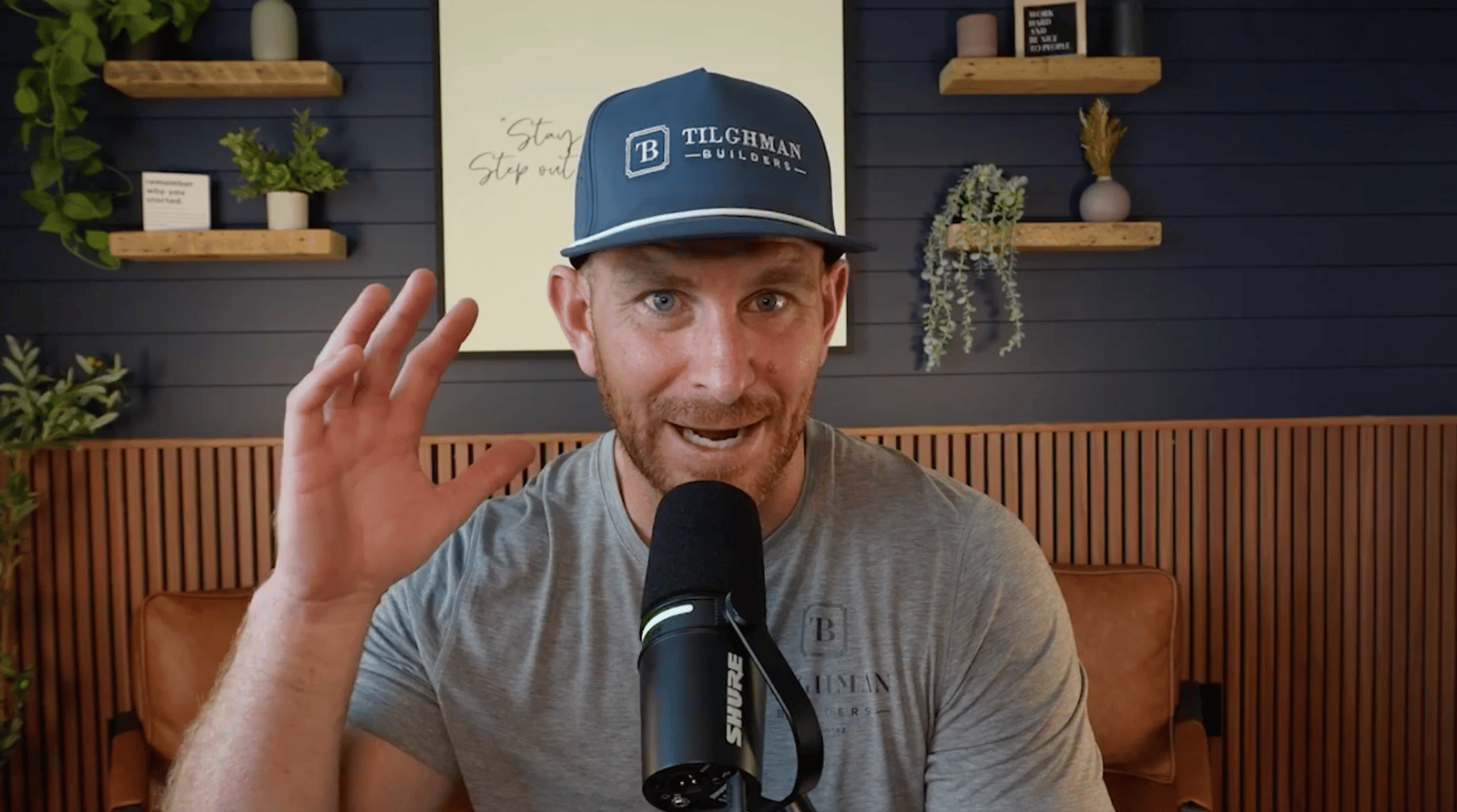
In this episode of the Built Different Podcast, Eric Tilghman shares how creating a culture of kindness, accountability, and genuine support has transformed the way his team works together.
From seasoned construction veterans who initially struggle to accept compliments to employees who eventually feel comfortable being their authentic selves, Eric explores what happens when leaders consistently put people first.
He also shares why company culture is about more than pizza parties, team-building events, or motivational sayings on the wall. It's about how you show up for your people, especially when things get difficult.
Whether you're a contractor, business owner, or team leader, this episode challenges the traditional definition of toughness and offers a different perspective on what it means to build a strong team.
Because being tough and being kind aren't mutually exclusive.
Be nice. Be positive. Step out of your comfort zone.
WATCH HERE:
Follow and listen to other episodes here:
 |
 |
 |
Hi everyone, welcome back to another episode of the Built Different Podcast. I'm your host and the CEO of Tilghman Builders, Eric Tilghman.
Over the years, I've noticed a trend, and I wanted to share it with you. I thought this would be a cool next episode. If anybody's even listening to this podcast, there's got to be a contractor out there who's wondering, "I kind of feel weird doing what you're suggesting, right? This warm, fuzzy vibe in a construction company."
I understand your hesitancy. I get why there's this stigma around construction that it's got to be rough, it's got to be tough, it's got to be all these different things. But what I've learned is that we had a proof of concept. This was just an idea, and then we realized, hey, people want this. So at this point, I have proof. I have proof that it works.
I hope to encourage somebody out there, whether you're in construction or some other industry, it doesn't really matter. But this episode is mainly geared toward somebody in a rougher industry, like construction or anything like it. Hey, maybe you work at a township building. Maybe you're in public works, right? That's a pretty rough industry too, I would imagine. I know how guys behave, and I know what we're all used to.
So this week's episode is about those old dinosaurs. They've been in the industry their entire life. The scars are deep, and I've noticed a turnaround with guys like that.
Imagine guys who have been in construction for twenty, thirty years. This is something I've noticed with a lot of the older guys on our squad. When they join the team, they're excited about what they're hearing. They're like, "Whoa, they put culture first. They didn't talk about much else other than culture and values and kindness and accountability and honesty. They're promising me this is going to be a really wonderful place to work. And that feels weird. No other contractor is telling me that. I don't know if I can believe it or not."
So in those beginning weeks or months, they're testing the waters. They're not really sure if this is the real deal. And then shortly after, they find out.
They're tough. They're old school. And once they come onto our team, it's always at the team meetings when I notice this, because that's when the whole group is there. Everybody's happy to see each other, everybody's high-fiving, we've got breakfast, we've got coffee. We're celebrating wins. We talk about areas where we can improve. We're always talking about growth and development, not just as a company, but as individuals. Always growing and expanding your mind, expanding your skill set.
And then another thing happens: the shout-outs. We usually hit those first thing at a team meeting, and it's very uncomfortable for anybody new to the company, especially these old dogs who have been in the industry for a while. It's the first time they're seeing this. Normally it's grunts and groans. "Morning." "Yeah, what's so good about it?" Blah, blah. "My old lady this, my old lady that." That's the industry, until now.
I just refuse to spend my life around people like that, and I refuse to spend my life feeding into that. I had to do that when I was younger, and I don't want to do that anymore.
So for the last six years, we've really focused on company culture: the way we treat each other, the way we make decisions, the way we treat our employees, period. Everybody here has a part in the culture. We all have to show up and be our best selves. But as the owner of the company, it's a little bit harder, because sometimes you've got to put your money where your mouth is, and that can be hard to do at times. To do the right thing. To give the raise when you know it's deserved, or to loan money to an employee who needs a little help buying a house or whatever the thing is. A lot of times money can help, and that's sometimes challenging.
So culture is not an easy thing, but it's something we live by here.
So guys come in, and they're like, "What is going on? These guys love each other." They're shouting out, they're hooting and hollering and laughing at each other's jokes. They have inside jokes. They all seem to really like each other. And they're giving compliments to each other, like:
"Hey, I want to shout out so-and-so. I really enjoyed the time I got to spend with you when we were putting together those built-ins at Mrs. Smith's house. Before that, I didn't really know how to do built-ins, and I still kind of don't, but you were a great teacher and you have been ever since. I just want to thank you, because ever since I started, I love everybody on this team, but you above all have really helped me, and I appreciate that."
Boom. They hear that from one guy to another guy, and then that guy has to shout out another guy. It's the first time they've seen that, and it's uncomfortable. I see it on their faces, and that's what this podcast is about. They're uncomfortable, they don't know how to react, and they usually don't say a word. I have like seven guys in my head right now.
Pretty much every guy goes through this. They're like, "Whoa." But the older guys, the rough ones, man, they really reject the culture at first. They're not sure what to do. A lot of times they're quiet during team meetings. They don't want to speak up in front of anybody. The shout-outs obviously make them uncomfortable. It feels awkward for them to receive any sort of praise, let alone give any.
To be a part of this team, you've got to be used to giving feedback frequently. And I'd actually say that in our company, it's a lot harder to give constructive feedback than positive feedback. Think about your life. What's harder: giving constructive criticism to somebody you like, or somebody you don't like? It's easier to give it to somebody you don't like, because you don't really care how they feel afterward. So in our company, it's a lot easier to give positive feedback, because we all like each other.
So receiving praise and giving praise is hard for these new guys, these old dinosaurs who have been in the industry for a while. In some cases, it's the first time they've ever done that with a colleague. Kindness and support between guys feels foreign. From the outside, it's almost like, "Is this shit actually real?"
I swear, if you could just see their faces. It's literally like they're not sure if it's real, like they're being punked or pranked. I don't like watching them go through that, but I do know it's a good thing and a step in the right direction.
If you're right for the company, you'll stick around. And if you're not, that kind of behavior actually makes you uncomfortable, because it's not who you are. You're way outside of your comfort zone, and you'll sabotage it, even though it's a great opportunity for you. People are only ready for what they're ready for. So a lot of times, if someone isn't the right fit, those team meetings will turn them off a little bit, and they'll think, "I'm never going to be okay with this. I'm never going to be able to get in line with this." Well, if you can't get in line with that, it's all good, but you're not going to hang around much longer.
So why the mask? Why the armor? This podcast is about taking off the armor. This industry forces you to put a mask on. It just does. The industry breeds this kind of miserable, complaining, "What's so good about it?" attitude. Some people are just like that.
But here's what happens. Take one of my old dinosaurs, the ones who have now come over to the other side. Maybe they're 50 years old now. Imagine them at 18. They're just starting to get a job in the real world, they get a job in construction, and they meet their boss. And their boss is one of these typical construction guys: a little rude, a little offensive, not very nice, doesn't train you, doesn't care about you at all.
Well, in order to survive that kind of environment as an 18-year-old kid, it would be wise to adopt that same behavior. Otherwise, you're going to be made fun of, you're going to be teased, you're going to be given fewer opportunities to learn or try new things. And eventually you'll be pushed out, whether you quit yourself or they drive you out because they give you such a hard time. I grew up in this industry. I know how it feels.
So a lot of times these guys adopt this new persona. Nice guy, parents loved him growing up, and boom, he gets confronted by this boss. Now he's got to put on this suit of armor every day and pretend to be one of the other guys. It's common. I did it myself, and I've seen many others do it too.
Construction rewards toughness. Keep your head down. Don't show weakness. Bust balls instead of giving compliments. Don't talk about your feelings. Don't admit that you need help. Don't let anyone see any vulnerability at all. Do that for twenty or thirty years, and eventually it becomes who you are. People actually forget how to act without it.
Anybody who's up there in years, 35 or older, you know how that is. You've shaped yourself into the person you are today through the things you think and feel and observe. And once you become who you are, it's really tough to change. So you can imagine how these guys squirm when they first come in. I always hope they can break through. They don't always, but I always hope they do.
And let me stop for a second, because this is totally different from the young guys who come in, for the most part. If a young guy comes in as a tough guy, that eventually changes here. But a lot of young guys just love what they hear from the beginning. The younger generation likes the Google work environment, with beanbags and ping-pong tables and sleeping pods, and they're like, "Yeah, that sounds great." They see the nice building, they see the friendly faces, maybe they've seen our content on social media, and they want in right away.
But the older guys experience something quite different. They're quiet at these team meetings. They're very reserved. They don't know how to act. Honestly, in the beginning, sometimes I don't really care for them. I feel like they're not a good culture fit. I've been fooled many times. But what I'm really picking up on isn't someone with poor character or low energy. It's someone going through a little bit of an identity crisis. They're not sure who to be.
But something starts to change, and nobody forces them. They simply experience the culture week after week, and all of a sudden they learn that it is the real deal. They see guys genuinely helping each other. They see mistakes addressed without anyone being humiliated. Nobody's yelling at anybody out there. They see accountability without anyone being a jerk. They hear genuine compliments. They see their leaders actually live what they preach. And then they have this aha moment: "Crap, this might actually be real."
I'll stop again: people do not quit our company. So if you're a business owner, if you're in an industry and you're trying to turn things around and you're thinking, "Hold on, this feels weird," the proof is in the pudding. Nobody quits. Nobody quits. They love their job. They love each other. They support each other, and they feel that support.
Sure, there are good days and bad days. Of course. I get mad at my team members. They get mad at me. It doesn't mean anything. I get mad at my sisters. I get mad at my wife. My wife gets mad at me. We love each other. It's this real bond that we've formed. So I just want to stop and say it: nobody quits. Everybody really likes where they work.
So then the armor starts coming off. They start participating in team meetings. They give someone a shout-out. They accept compliments without getting all weird. They start joking around, helping younger guys, showing more personality, speaking up in meetings, things like that.
And the beauty of this whole thing, what this podcast is really about, is that all of a sudden something is uncovered. What's uncovered is this person's real personality. On the outside, they've got a big beard, a Harley, sunglasses you can't see through. They look tough and rugged, like they've been around. But underneath is a smile. Underneath is somebody who cares. Underneath is somebody who wants to be calm and nice, who wants to show up relaxed and be themselves, be nice to other people, compliment people. They want to give and feel love. Period.
I said it. I know we're talking about rough construction dudes, but humans have needs. Being part of a team is one need, I would think, especially for men. Feeling appreciated and feeling loved is another.
So it's fun watching the mask fall off and watching their personality come to life. This culture isn't making them soft. It's letting them be who they truly are, period. It's really cool to watch, and I really like that part of my job.
Sometimes it's at the one-month mark. With certain personalities, it's three days in, and they're like, "I love this place." Others take a little more time. They really resist, because for a lot of people, bad things have happened and they've only had bad bosses. Then one day they're like, "Okay, wait, this is different. Well, it's only a matter of time before I find out the truth here."
And the truth is this: we're not perfect, but we care about you a hundred percent. We care about you. We want to know if you're having a problem, if you're having an issue, if we can help in some way, or if you just want to talk about whatever: fatherhood, marriage, depression, anxiety, stress on the job. It doesn't matter. Whatever it is, you can talk about it here.
So what this has taught me about culture, and I should reiterate this a whole lot more than I do, is that culture is not pizza parties. It's not team-building events. It's not shirts. It's not words on the wall. We have sayings all over the walls right behind me. Geez, I say it at the end of every podcast: Be nice, be positive, and step out of your comfort zone. But that's not culture. That's not culture at all.
Culture is how you show up. And it's how you show up in the hard times. It's cool when things are good and we show up for each other. But I'll give you an example: we're about to have a team meeting, and it's not going to be a good team meeting. There are a lot of bad things to go over. It's how you handle yourself during those times. Over time, people start to really see who you are. Not just who I am, but who everybody is.
So be careful who you hire, be careful what you say, and watch the vision you're sending out to your people. Eventually it gets traction, and it becomes the company. The company today is one hundred percent exactly what I hoped it would be years ago.
The greatest thing here is that you don't have to protect yourself. We really do welcome and encourage people to show up exactly as they are. Be normal. Just be normal. Be yourself. Come in and learn as much as you can. If you have a question, ask the question. If you're having a bad day, tell somebody. Just be real. Be a hundred percent authentic. That's all we want.
And that actually generates more authenticity. When somebody is being authentic, it inspires others to be authentic as well. I'm very open about the things I'm struggling with. I don't know if I do it on purpose. I do it because it's who I am. I'm an open book. But that's shaped the culture a hundred percent. Now other people feel comfortable doing the exact same thing, and it really catches on.
So don't write off the quiet or skeptical new guy. This is kind of a leadership lesson, especially with the seasoned guys coming from a different environment. Give them time. Don't force them to participate. Don't demand vulnerability. Just let them observe. Keep showing up and proving that the culture is real. Consistency is what earns trust, and that's true in all relationships, right?
Simon Sinek has something great that he always says, and I'll repeat it here. He says something like, "I can't tell you when I fell in love with my wife, but I do love my wife. I can't put it to a date and a time. I don't know when that happened. All I know is she consistently showed up as a person I wanted to spend my life with." There weren't major swings, and any swings there were stayed within what he thought was still good.
And for my wife to say the same about me: my swings are way wilder than her swings. She asks how my day was, and she kind of braces herself. Amy's a blessing. Thank you, Amy. I love you.
But you don't know when it happens. All you know is that it did happen, right? So with culture, and with relationships in general, it's just consistency through all sorts of experiences. Good times, bad times. It's hot, it's cold, it's wet, it's snowy, whatever the thing is. You just keep showing up as a team, being supportive and there for each other. And eventually guys really have strong relationships. Then the new guys see that, they want it for themselves, and that's it.
Closing thought: I just wonder how many genuinely good men are hiding behind construction shirts and big beards and a cup of Wawa coffee. They look grumpy, and maybe they are, but I just wonder how many of them are masking who they really are.
I did it. I for sure did that. And my life improved tremendously when I stopped. When I made the decision: I'm not going to do this anymore. I'm tough, but I don't want to be tough all the time. Right now, I just want to be regular. I'm funny, but I don't want to be funny right now. I have different moods, and right now I'm in a mood where I don't want to be funny. Fine. That's what I get to do here, and that's what I want everybody to get to do here.
Normally I'm funny, but today I'm feeling off. And I don't need to hide that I'm feeling off from you, because I know that you love me and I know that you care about me. We've been together for years, and it's all good.
One of my favorite parts of building this company is watching these guys take the armor off. Watching someone realize that they can be excellent, accountable, tough, and kind. And watching their true personality come out.
So maybe we don't need to make construction guys tougher. Maybe we need to build companies where they don't have to pretend to be tough all the time. That's why we're here. That's what we're doing.
There are other benefits to having a strong company culture. This is just one of them, and it's a fun thing to observe. But uplifting people and giving people a better life is certainly a motivator, a hundred percent. That's a big one for me. I'm not really motivated by money. Well, the tests would say I'm motivated by recognition from others. But what I'm really motivated by is contribution. I want to help people. I really do.
I couldn't always have said that. Not when I was a young kid, for sure. I was such a selfish, normal kid. But for the last seven or eight years, that's what motivates me. I just want to leave a positive stamp on the world. Right now we have 40 team members, and I hope I'm making their lives better. And they're making my life better. They are. We all work hard together, and when we're not working hard, we're playing hard, having fun, laughing and joking. It's all really good.
So again, if you're a business owner, or anybody, take the temperature of your culture. I have a buddy who works at Comcast. He runs a team, and I'm sure he's a rock-solid leader. But maybe you run a seven-person team in some humongous company. Take the temperature of your culture and see: do these guys love it here?
And if not, it's not that hard to change. It just takes time, and it takes one person to go first. It takes one person to have the courage to say, "You know what? I don't want to be like this anymore. I want to be like this instead." Then you just start. And slowly, over time, it catches on. For me, it was about two or three years. Now here we are, about six years in, and it's contagious. It's here forever.
So that's it, guys. Thank you as always for staying tuned. Stay positive, be nice, and step out of your comfort zone.