

What happens when the leader runs out of energy?
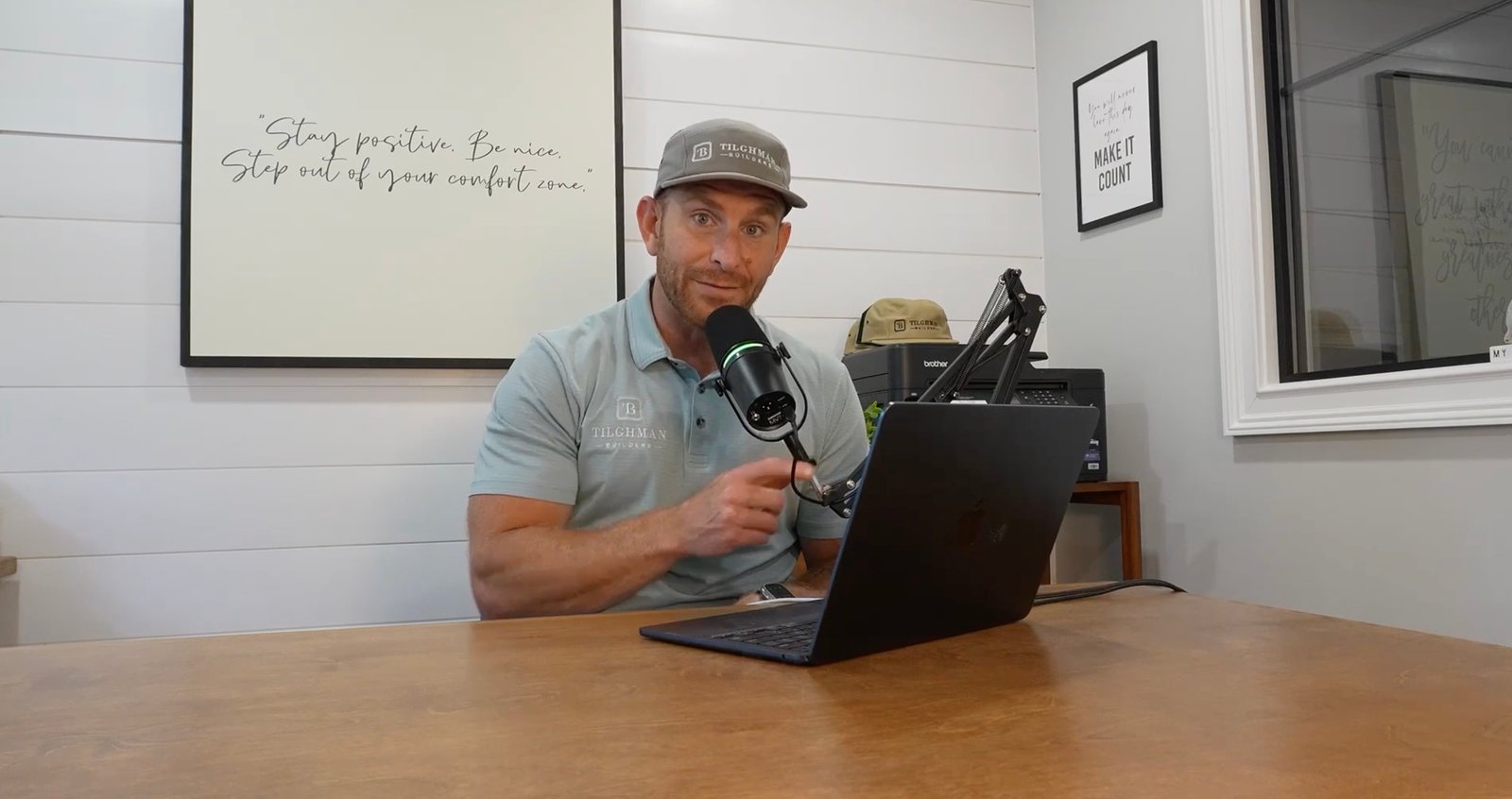
In this episode of the Built Different Podcast, Eric Tilghman shares a brutally honest look at a week where he found himself off his routine, disconnected from his normal habits, and feeling the impact throughout his company.
As leaders, we often focus on systems, processes, and performance. But what if the biggest factor affecting your team is you?
Eric explores how personal habits directly influence leadership, company culture, decision-making, stress management, and team morale. Drawing from his own experiences, he explains why your energy sets the temperature for everyone around you and why taking care of yourself isn't selfish—it's part of the job.
In this episode you'll learn:
✅ Why your habits become your leadership style
✅ How your team mirrors your emotional state
✅ The hidden connection between personal well-being and company culture
✅ Why burnout is celebrated in construction—and why that's dangerous
✅ Practical ways to refill your cup and show up as your best self
✅ How calm, consistent leadership creates trust and accountability
If you've been feeling overwhelmed, reactive, frustrated, or simply "off," this episode is a reminder that before you can lead others well, you have to lead yourself first.
WATCH HERE:
Follow and listen to other episodes here:
 |
 |
 |
Hi everyone. Welcome back to another episode of the built different podcast. My name is Eric Tilghman, the CEO of Tilghman builders and your host of this podcast. So this podcast is all about creating company culture, right? Actually convincing other business owners or other, other industries to approach their companies with a, with a culture centered approach. I'm not an expert.
I don't claim to have it right all the time. We'll kind of discover that a little bit tonight. But that's kind of the overall goal of this podcast. It's become very, very important to our company over the last five, six years. And we have become a high performing and successful company as a result. Again, we don't win constantly. We're learning as we go, but I'm sharing my experience as we go here as well.
And so tonight's episode is all about energy. It's all about the energy of the leader. How are you showing up for your company? Or if you, maybe you head off a department, right? Maybe you have, maybe you're a leader of a five person department or something like that. I just, I've always valued, I've always put so much value on how I show up as a leader, you know?
I've shown up in the past, you know, when I was much younger, I would kind of just show up without any intention at all. Which if you've heard previous podcasts, I was a poor leader at one point. And I think sometimes I still am for sure. But over the years, what I've really learned how to do was structure my mornings so that I can show up as my best version. Not only structure my mornings, but also
kind of monitor my attention or protect my attention. What things are getting my attention? And I've learned to stiff arm a lot of them. So anyway, it seems like the perfect time for this topic. It's gonna be a lot about the leader here, but it's a good time for the topic because I feel like I'm doing poor in this area at the moment. So the topic here is all about showing up with the right energy for your team.
so that they feel good, that they feel calm, so that they feel protected and heard. All the things that you would want in your company or in your department. However, I went on a trip last week. Four days leading up to the trip, it was a lot of work to kind of get to the gate of my plane. And then it all kind of just came to a screeching halt.
Right went on this trip. It was a business retreat with Nolan consulting group. There are business coaches It was an incredible time. We a lot of soul-searching a lot of hiking and Having fun with the other people that are that are in this group but jetlag a Red-eye flight, you know, it left me totally like dizzy after this This thing so it just kind of threw me out of my routine like I have not been in my routine for a couple weeks and and
When I I kind of came up with this topic, I thought it was actually a perfect time because I'm not feeling super energetic right now. I feel a little beat down, honestly. And I'm always going to take this approach with this podcast. I want to always be real. want to always just be honest because none of us are robots. And I think that the the overall theme of this podcast being that it's culture and building your business through company culture.
I think sometimes it can come off like we have all the answers and that we're perfect and we are not and I am not. So I'm going to take every opportunity I can to show you guys where I'm weak. And this is one of them because I'm so thrown off my routine. And because of that, I don't know. I feel like I'm maybe attracting problems that maybe wouldn't would have otherwise not have happened perhaps. But what I can definitely say is
when I feel it, when I hear these problems or when little issues come up, it's kind of been like a problematic week and a half. And when I, when these problems come up, I'm just a little weaker than I would normally be if I was prioritizing the things that are important. So we're going to get into all that stuff today. And, and how our team is feeling, how our team is perceiving us when we're, you know, when we're in a lead role.
Right? so, so really the one one thing I want to start off by saying is that your habits become your leadership. Like you are what you do. You are how you feel. People perceive us however we feel. And over the years, as I've gotten older and I might be preaching to the choir here, I'm sure many of you already know this, but like
It's important that our mind is in the right spot. You know, it's important that our, you know, I don't know if we're going to a party, you know, that we don't have any negative juju going on in our in our head. Instead, you know, go to the party on the way there. Be like, think about the people that will be there and think about the things that are going on in their life and kind put yourself there. I can't wait to connect with this person for that reason. You'll have an entirely different experience, but you'll also they'll have an entirely different experience. I think those
who know me best would say that I hope that I make people feel good. I think that I do. I certainly try to, but I don't try to in the moment. I try to in front of the moment, right? So when I'm at a party, I'm not trying to be any way. That all kind of happens like the morning of and like throughout the afternoon and then the car ride to the party. And my conversations with my wife before we go to the party.
You know, and then once you get to the party, it's kind of autopilot. Like I've already put it all in my head and now I'm just there. Same thing with our work day. So in the morning, you know, I just think that it's very important to prioritize, you know, some sort of a mental exercise, whether that's journaling or reading, some physical exercise, whether that's working out, running, swimming, going for a walk, getting outside. Getting outside is probably one I could do more of.
You know, a nice early morning walk.
heard great things about an early morning walk. I've had some early morning runs. Haven't been lately. So maybe I'll maybe I'll get that back in the mix. But I tend to like just do the treadmill lately. A little bit lazy, I think, if I were to be honest. But really,
You know, what we want to do in the morning is we just want to fill our cup, you know, we want to fill our cup. We want to be prepared. We want to be early and on time like I'm probably one of the last ones to arrive in the morning when when I
probably I'm probably one of the I'm probably one of the last ones to arrive in the morning but jeez what was I saying
Ahem.
I'm probably one of the last ones to arrive in the morning, but my entire morning is all about filling my cup, right? So throughout the day, everything that comes up, every interaction, every problem, every difficult conversation, every difficult task that we don't want to do, whatever the things are, we're taking a little bit from our cup and we're dumping it all throughout the day. We're dumping this...
fluid out of our cup and into other people's cups, right? But we only have so much in our cup. So the way I like to treat the morning and the way that I'm encouraging anybody to treat the morning is to do whatever it is that fills you up. know, one thing I don't do anymore, I work out at home now. And one thing that I really miss is my personality. I like to talk, I like to make people feel good. And so, and I also like to work out. So I used to go to the gym.
And a big part of my gym experience was actually walking around smiling, saying hello to everybody, you know, asking people about whatever. And I would be there for extra long, but it didn't, it helped, it helped me. It got me, it helped kind of fill me up for the day, you know, so the workout was there, that was great, but also the interaction. So anyway, whatever it is for you that fills you up, that's what I recommend you do.
You know, when you most people, most people separate business from personal, like well-being, they are 100 % connected. Like you will only show up however you feel. I've talked about like your marriage, your father, like all these things. Your personal life definitely has a lot to do with your business life. And I'd like to shine a light on that today.
When you neglect yourself, you just jump out of bed and race off to work, you are not taking the time for yourself. So I just think that it's important to slow things down, spend some time on yourself. And when we don't, patience shrinks, emotions rise faster. Yep, I'm feeling both of those things this week. Stress tolerance drops, yep. Decision making gets worse, yep. Leadership becomes reactive, 100%.
I've experienced all five of those this week. So this podcast is so aimed at me right now, which is great, because I'm gonna probably just re-listen to this on the way home, and that's really my conscience telling me I gotta make a shift here. I'm like a week and a half off, irregular here with my routines, and it's driving me crazy, and my team sees it. I know it.
I just know it. I've been doing this long enough. I know that they see it, they feel it, and therefore I'm affecting them in a negative way. the construction industry as a whole totally neglects this stuff. What is the construction industry well known for? Hustle culture, which we recently talked about. Poor sleep, drinking, stress being glorified.
guys running themselves into the ground and owners carrying constant anxiety. We've talked about this before, but burnout almost gets worn like a badge of honor. Eventually though, health suffers, marriage suffers, patience disappears, and then culture suffers 100%. So like, yeah, I'm taking a dip here right now, about a week and a half, three days of it, I wasn't even here, I was just away, which is.
the root cause of my dip. But I've been back for about a week and yeah, I kind of can feel it. know, my mood is off and if my mood is off, everybody's mood is off. It's just true. Things that help you show up better. Okay, so this is just some things that I like to do. I don't know. This isn't going to be, I'm not going to stay here for very long because it might come across like braggadocious or whatever. I like these things. I've been doing them for a long time.
I'm not gonna stop doing them. And they really, really helped me. And without it, I totally crumble. But it didn't start as all of this. It just became all of this. I don't know. I feel like many years ago, I had a certain level of responsibilities. And so I had a certain level of self care that I required to keep up with those responsibilities. Over the years, my responsibilities have increased. I'm married. We have a bunch of people in this company.
I have three children, I coach their soccer teams. I ran for school board, right? These things, take time, they take fluid out of my cup. So now I need to fill my cup up, it takes a lot longer. But ice baths, they totally help. And sauna. So ice baths, I like them because discomfort training, mental toughness, learning to stay calm under pressure, and resetting your nervous system. Plus, they're just totally good for you.
inflammation and things like that. There's nothing worse than getting in freezing cold water early in the morning. Sauna. I like sauna a lot because I kind of run a little bit fast. I'm a little bit hard on myself, things like that. Sauna, requires me to sit down and wait. Like a sauna doesn't get hard until like you're maybe 15, 20 minutes in. But it's warm, it's calming. It gets a little intense after you're in there, but
That really helps me. Forces you to slow down, quiet time, stress reduction, decompression, thinking clearly.
Exercise, 100%. This is the biggest one. I'll never stop talking about this. You can forget about ice baths, forget about saunas. Exercise is where it's at. Mood improvement, confidence, discipline, stress release, and mental sharpness. Plus, if you can wake up in the morning and put yourself through a hard workout, you will feel like none of the rest of the day's problems are actually really problems at all.
you already overcame the hardest thing that you're gonna do that day. At least that's the hope, that's the theory. Some days you have something harder. Yeah, well this is true. Exercise is less about looking a certain way for me now. It's more about staying mentally healthy and emotionally stable, 100%. It definitely was not always about that, but it is now. Morning walks, something I don't do, but...
I love the points that I'm making here. Not rushing into chaos, slow mornings, sunlight, vitamin D, Vitamin D without the harmful sun's rays, sunburn, thinking time, starting grounded instead of reactive. All good, all good for leadership. I got to get on a morning walk. You always think that's the thing I'm missing. That's what I think anyway.
Reading has helped me a lot. reading forces me to just sit down, be quiet and read this book. You know, I want to always just jump into things, whether it's the workout or whatever it is, or maybe it's work. But reading helps my personality. Might not be for everybody. You know, if you're naturally, if you're calm and cool, maybe you want the opposite. Maybe you want to jump right into that ice bath or jump right into that that exercise. Journaling.
Another thing that's really helped me, similar thing, it calms me down, forces me to sit, and it also allows me an opportunity to self-reflect, which is great. I'm out of the practice of journaling. I gotta be honest, I haven't journaled in some time, and I probably should. A calm leader creates a better company. when a leader takes care of themselves, the things that could be expected are communication improves,
Patience improves, culture improves, conflict decreases, people feel safer and better decisions get made. I just feel more in control of myself and of my emotions when I work out. And I just think that we owe it all to our team. Like that's the overarching theme of today's podcast is my team does so much for me.
I am required to do one thing for them and that is to show up every day as the best version that I possibly can. And that's really, really important to me. I've been off for about a week. I've been off of my normal maintenance and I feel it and I just feel like they can feel it. And so I'm going to, I'm about to snap back into it. This podcast is probably the start of that.
This is, it's not about perfection. So, okay, yeah, this is important. Leaders never struggle. Leaders are always calm. Routines solve everything. I'm not saying any of that. But what I've realized is just that I owe it to everybody. I owe it to everybody around me to be the best version I possibly can. And this is really a message for anyone.
you know, I just think this is the way the world works. I just think that we should all live on this earth together and try to do as much good for one another as we possibly can. And I think that the way that we show up, you know, I have to do something nice for you, but I can show up and be, have good energy while I'm around you. That's a nice thing to do for somebody, you know, to prioritize that. I don't know.
I just think that's very, very important. Let's see. Self care versus scape ism. Interesting deeper point, huh? There's a difference between healthy recovery and numbing yourself. Things like doom scrolling. man, this is such a good topic. Okay, right? Because these are the things that people go to doom stroke, doom scrolling, drinking constantly.
isolating and then working nonstop. None of these things actually recharge you. Once you start down this slippery slope of avoiding your self care, whatever that may be, whatever you need, and only you know, and everybody's different. I know what I need and I know I've been off for about a week, but I know exactly why. I've been doing this stuff.
for years, I know exactly what's going on. It makes it feel like the problems are bigger than they are.
So number one, it hurts, right? There's been problems the last week. I run a company, there's been problems, but they hurt more than they normally do when I'm feeling good and energized. know, diets dialed in and workouts are dialed in and my routine is, and my mornings, I'm not feeling behind. That's the other thing, like, we never want to start our workday feeling behind. You ever been late to work and...
I don't know. Say you're late to work. Well, this kind of happened to me today. I was dropping my daughter off for preschool. We were late and I didn't have any meetings. So was just later than I wanted to be. But but we were late to dropping her off. I got in my truck and the battery was died. I'm sorry. The battery was dead. And that what a terrible feeling it is to feel like behind.
call my neighbor, comes over, he helps me jump my truck. I get my daughter to school. When I sat down at my desk, I had to totally reset. Like, okay, you lost a half hour here. It's not the end of the world. Just push everything back by 30 minutes and you're totally good. But it really is awful when you're feeling behind and then a problem comes in your door and you can barely emotionally handle it. So that's kind of what I'm leaning into today is,
as the leader of whether it's a company or of a department, we have to prioritize how we're feeling and also just the stability of our personal life and how are we managing all of it? Like I've talked about like, I picture it like this big dust cloud and you know, have to stay in front of this big dust cloud and once we fall back, once we fall just a little bit, we don't,
clean our room one day or we don't prep our clothes for the next day, one day, like all of a sudden these little things, they start creeping back and now you're behind the dust and you can barely see, right? We have to get in front of the dust cloud and then we have to just stay in front of the dust cloud. That's how I imagine it. But I'll tell you right now, I'm shielded by a cloud of dust right now. I can feel it.
I can feel it in my personal life and I can feel it in my professional life and it's not going to go beyond this week. I just can't take it anymore. You know, so it took me a week to kind of feel enough pain to reset that. But, that's life, right? We all go through that. That's, that's pretty normal. We, we go up and we go down. It's probably one of the most annoying things about life is the ebbs and the flows, right? It's like, it can be torturous sometimes.
Sometimes you just wish you could just do what you said you were gonna do, just be more robotic, but never gonna happen. But if we do have an emotional commitment to why we're doing it, you know, I owe it to my team, I owe it to my family, I owe it to my kids to wake up and to do these things and to take care of myself so that I can handle the pressure, you know, so that when someone comes in with an annoying problem,
I can give it the time and attention that it deserves. Or if there's a difficult conversation to be had, I handle it in a way that is nice, polite, kind, assertive, accountable, sure, but like, you know, calm. So anyway, that's really it for today, guys. I mean, I just wanted to make this a quick one, really just about energy about the way that we show up for our team because
They, your team is absolutely a reflection of who you are as a leader. No doubt about it. Let's see some other points here.
Yeah, some self awareness stuff. So what energy am I bringing in today? Am I creating pressure or clarity? Do people feel safe talking to me? Am I emotionally reactive? Am I carrying stress that's leaking on to others?
Sometimes, especially in this industry, and probably all industries, it can feel like, and only a weak leader would allow this to creep in and stay there for too long, but it's kind of like, I feel very stressed out, and so everyone should feel stressed out. That's not right, and that's a problem. Back to your team mirroring how you act as a leader. If the leader is,
Gossiping, the team gossips. If you're panicking, the team panics. Blaming, blaming. If you stay accountable, the team stays accountable. If you stay focused, solution focused, the team stays solution focused. Culture is often imitation. That's what I think I've learned the most. Because people say, how do you do that? How do you get?
all these people to get along and get it. And it takes a little while, but it's imitation. And so you have to stay consistent, but you also have to stay positive and energetic and calm and all those things. And that all relies on you. That's all on you as the leader. So accountability and calm can coexist.
Yeah, being a leader does not mean never feeling stress. It means learning how to process it responsibly. So calmness builds trust. I like that a lot. That's true. You know, most people in most organizations, the best leader is a predictable leader, right? And I'm not saying I'm always perfectly predictable, but that's the goal. That's definitely what I shoot for, you know?
The best leaders are a predictable leader, one that stays calm. And if you stay calm for, I don't know, 10 months straight, there's problems every single day, but your team's like, I got a calm leader, right? And then you have a bad day, they don't care. They're concerned, they want you to feel better, but they're not mad at you. You get a pass because you have a track record of being calm.
So, it's what I feel like I'm going through right now. You know, I kinda got a little bit upset yesterday at one of my team members for a problem that was probably not that big of a deal. But the person who I was talking with, they know me. They know me, they work very, very closely with me. Well, was JP, my operations manager. But I get a pass, you know? I get a pass because I never do that. I never...
I never do it, I never freak out. And then today he came in, we talked and I said, hey, just so you know, by the way, I'm I don't know, I'm just off, I'm dealing with some things and these problems, they just feel bigger than they normally do. So I'm sorry for yesterday. And then he turned around and said, it's all good. Actually, it was my fault. I did that thing that you were upset about was something that I had done wrong, period. So he took accountability for it, which made me feel like, okay, good, cool.
Like you're right, that was on you, but my reaction was on me. And so we both made right by the situation. I'm really grateful for that relationship, by the way. He and I have a very strong relationship. It's good. But it's only because of how we consistently show up for each other. So anyway, as a leader, you're setting the temperature in your company, in your department.
on your small team, whatever it is. And if you're not putting yourself first and putting the oxygen mask on yourself before you're running out into the wild and helping everybody else with theirs, I would recommend you think about that. We should all be showing up with intention and we should be taking care of ourselves.
on a regular basis, especially if you're the leader, but really everybody.
The
That's us showing up to the party. not at the party trying to be a certain way. I'm thinking about how I want to be at the party.
18 hours before the party starts. Maybe not 18 hours. I don't know.
good energy that will help fill up other people's cup while I'm there at the party. anyway, as always, thank you for staying tuned. Stay positive, be nice, step out of your comfort zone. And if you're off your normal routine like I am, get back on track. You need it, your team needs it, and the people around you need it. So anyway, bye.