

The business world glorifies hustle.
Long hours. No days off. Burnout as a badge of honor.
But what if that mindset is actually hurting your company?
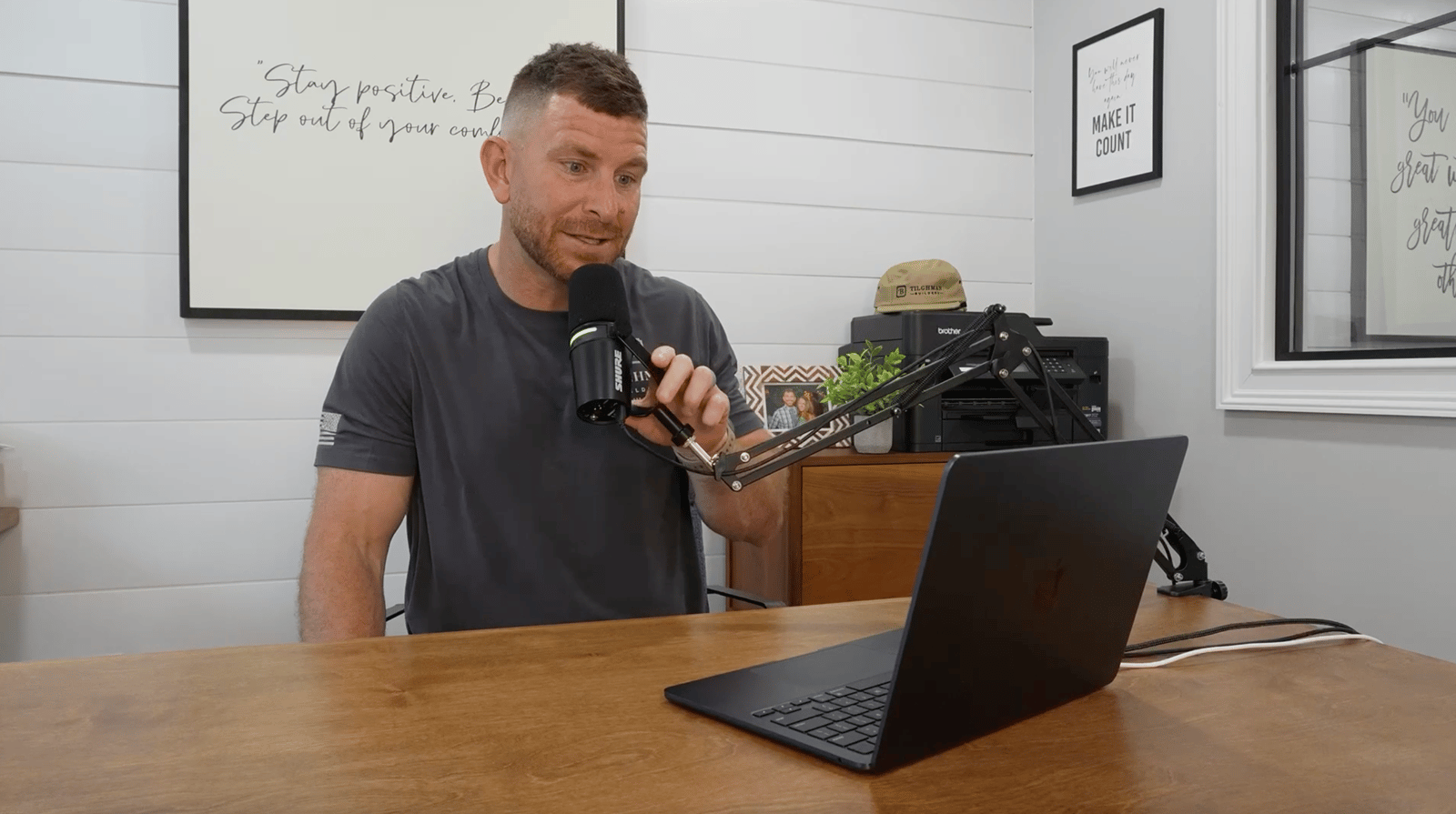
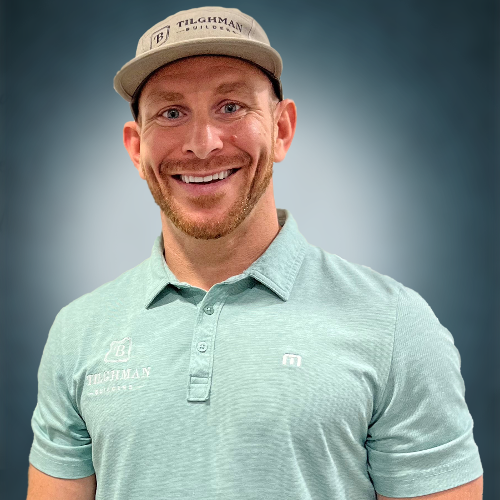
In this episode of the Built Different Podcast, Eric Tilghman breaks down why hustle culture creates exhausted teams, stressed owners, mistakes, poor leadership, and unsustainable growth.
He shares a different path:
• How to build a business people actually want to be part of
• Why leadership starts with how you manage yourself
• The danger of glorifying overtime
• How smarter systems beat longer hours
• Why protecting your team creates better results
If you’re a business owner, contractor, entrepreneur, or leader trying to grow without losing your mind—this episode is for you.
Work hard. Build smart. Stay sustainable.
WATCH HERE:
Follow and listen to other episodes here:
 |
 |
 |
Welcome back to another episode of the Built Different podcast. I'm your host, Eric Tillman, the CEO of Tillman Builders. Our mission in business and the goal for this podcast is to change the industry standard and what it means to be a contractor. On this podcast, we hope to inspire other contractors to follow our lead in business, and we will highlight the ways our culture-first approach has affected our team members, clients, and our overall product in a positive way.
The old way of running a construction company doesn't work, and we are here to spread a surprising message to the world about what it means to be a contractor and what it takes to get there. So on today's episode, we will be talking all about hustle culture.
It's a common theme of our industry. You may have heard this. YouTube is filled with hustle culture content, and quite frankly, I just don't believe in it. I used to put pressure on myself and believe that was important to succeed. And certainly, it takes a lot of hard work to succeed. But hustle culture is a different thing. So let's dive into that.
Construction certainly runs on hustle culture. I would imagine a lot of industries do. Long hours, weekends, pushing no matter what. In our industry, honestly, a lot of companies have hustle culture as their culture, and they almost wear it like a badge of honor. I've seen it. I know guys that do this. But I just don't believe it, and I certainly don't run my business that way.
I grew up in this industry. I saw this my whole life. Just kind of work more, push harder, figure it out. And like I said, there have been times in the past where I've gotten down on myself thinking, certainly I work hard and I've put in my fair share of 12-hour days, but there was a time where I wasn't, and there are still times where I'm not, where I'm working an eight-hour day. And I don't know, there's a stigma there and some head trash, but let's keep going here.
The more I really see hustle culture, the more I realize it actually doesn't build great companies. It really just leads to burnout or other things, and we'll get into those things. Hustle culture might sound good on the surface, and it's funny coming off of my last solo episode about office chatter and having a sense of urgency, because this is the opposite of what I'm looking for from my team.
It might sound good on the surface. It might sound like ambition. It might sound like drive. But it's not. What it really leads to is exhausted crews, stressed out owners, which is not good ever. The owner should never be stressed out. That will trickle down. Short tempers and mistakes on job sites.
I want to back up for just a second. I said owners should never be stressed out. That doesn't mean owners should never be faced with stressful situations. But I firmly believe that it's up to us as leaders, whether you're the owner or a leader in an organization, or maybe you lead your family, to be able to handle it. It doesn't mean suppressing stress. It means staying in front of stress. I've talked about that cloud of smoke, and if you can just pull ahead of it and then maintain, that's the idea.
So I want to clear that up. Owners should never be stressed. Owners should manage their stress, probably better than anybody else in the organization, to a certain degree.
But anyway, exhausted crews, stressed out owners, short tempers. We're working 12-hour days over and over and over. I'm imagining guys on the construction site, but I'm also imagining people in the office burning the midnight oil from six to six. Eventually, you get tired. And when we get tired or hungry, for me, when I get hungry, my temper shortens as well. My wife calls me hangry.
So it also leads to mistakes. Mistakes on the job site, mistakes in the office. But it also will creep into someone's personal life and family life. It robs them of energy. It robs them of family time. It robs them of time they could be spending learning a new skill set or working on themselves in some way. Maybe it's reading. Maybe it's working out. Maybe it's listening to content like this.
If you're a cog on the wheel, if you're just a hamster on the wheel going around in hustle culture, just go, go, go, you are not taking time to look back, look in your blind spots, and figure out what your next direction is. Your focus is narrow. As a leader of a company, your vision cannot be narrow. It has to be wide. You have to slow down and look around.
We all have our things we have to do. We all have our tasks. For me, I do sales in this company, and then I oversee departments. But when I'm not doing those things, it's so important to take that time, relax, and not think about the problems. Think about that wide-angle lens. Hustle culture robs us of that time. It robs our team of that time, time they could be using to learn a new skill, develop themselves as a person, or watch content like this.
Hustle culture keeps you stuck. We think we're doing the right thing. We think that because we're motoring through work, putting in 12-hour days, and doing all this important work, the work is important. But hustle culture keeps you stuck. It keeps you blind to the fact that you are doing the wrong tasks.
Eventually, I think hustle culture changes a person, which is really sad. I think it can harden somebody. And then everybody accepts it as just the way it is. In our industry, I'm telling you, this is real. For all you construction business owners out there, you would know. Maybe your company doesn't operate on hustle culture, but you know ones that do. So I'm trying to bring light to those companies or that way of life, and I'm expressing my opinion that I don't think that's the way to do it.
And look, you don't have to operate on hustle culture to be tough. I use every single minute of my day. I'm up at four. I go to bed at nine. And boy, when I hit the bed, you can ask my wife, I'm asleep in minutes. I leave everything out there. I do. A lot of people do. But I would never stay up till 10 o'clock at night working. I might get up early and work if I had to. But really, what I would rather do is focus on the efficiencies so I can fit more into my day, which is what I've done for years.
I think a lot of business owners see things that way. I'm certainly not saying anything new. Rather than working longer, just work smarter. We've heard that, work smarter, not harder. We hear these things, but they don't make sense, or we don't apply them.
We want to focus on efficiencies rather than packing more into a day. Really turning the lens onto the owner, hustle culture usually starts at the top. When I hear hustle culture, what I really hear is inefficiencies, poor planning, unrealistic deadlines, and systems that aren't tight. That's really what I hear.
The solution in a company that honors hustle culture and wears it as a badge of honor is just push harder, work longer, and squeeze more out of the team like a wet rag. You're going to squeeze everything out of your team. That is a failure waiting to happen.
What does failure look like? Team members that quit. Team members that get upset. Team members that demand more money just because of the rate of pace they have to operate at. Or it could be the company goes under. Look, leadership is so important, and everybody leads in a different way. I'm not saying my leadership qualities are the best. I lead a certain way, and I'm always learning and trying to adapt. Sometimes I go too far in one direction and have to bring it back and dial it up in a different direction. But ultimately, the company becomes the leader.
It's easier to demand more effort than it is to build something better. Yeah, I guess that's true.
Amateur move. I forgot to silence my phone. It's spam, as you can imagine. A lot of spam these days.
My team respects me. And I'll tell you one reason why. First off, we work really hard. Everybody in here works really, really hard. But there are times where something goes wrong or a deadline gets pushed up for one reason or another, and the work becomes really hard. We have to stay late. You have to work fast and hard and smart and diligent. There are times in business where it's brutal. It's really, really hard, and it leaves you gassed at the end of the day.
I believe a person should only tolerate so much of that. It's part of my core beliefs. You can't just keep doing that. Eventually you're going to ruin your life, and it's not going to be any fun at all.
When those things happen, I think time and time again, my team has watched me jump into action for them. Maybe we're talking about a problem and one of my team members has to work late until six o'clock to get this pricing done or whatever the thing is. I'll hear the problem, and sometimes I'll blurt out a solution. Oftentimes, I'll blurt out a solution to the system failure, because it's a breakdown in the system. I immediately want to prevent that from happening to that person again. Everybody is expected to leave here on time. That's what I want.
I think that's an important thing to note. It's not why I do it. I do it because I naturally, genuinely want them to love their job. That is a fact. And I want to love my job too. So we'll get into treating your team members the way you treat yourself. Then we'll talk about how we really treat ourselves.
This is where I want to slow it down. I don't want that kind of life. I don't want this fast, crazy, ridiculous life. I want it to be calm. I want to be able to think clearly. I want to be able to be present, whether it's present at work, present with my kids, or present with my family. Wherever I want to be, I just want to be there. If I'm in the gym, I just want to be there. If I'm on the treadmill, I just want to be there. If I'm at my son's baseball game, that's where I want to be. I don't want to be in multiple places.
And it's hard when you run a company, because you are always thinking about the company. At least I think certain personalities are, and I certainly fit that description. Sometimes it can just feel like a lot of work, or like work constantly.
Some things I do in my life to calm things down: I wake up early, but I don't rush. I don't get up early and then 30 minutes later jump in my truck and drive to the job site. No way. I wake up early, but I don't rush. I start my day slow. I give myself space to think. I take hours to myself in the morning, and I will never not do that. I never go to work without a workout.
Every week I get my hair cut. I got it cut today. I just sit there, turn my phone off, relax, close my eyes, get my hair cut, and then I roll. For me, I just want to treat myself like a human, at least part of the time, because it is tempting to work hard, really hard. But hustle culture wouldn't allow that. Hustle culture would not let you feel comfortable with a 1 p.m. haircut plus travel time.
Really, I don't think that's me being soft. That's me making sure I'm at my best.
Simon Sinek has an awesome story he tells. He talks about two guys chopping wood with an ax. They both show up at the exact same time. They both leave at the exact same time. All they're doing is chopping wood with an ax. The difference is one guy chops more wood than the other guy every single day. Day after day after day, he's able to chop more wood in a day than the other guy. And there's one difference between the way these two guys spend their day.
The guy who chops more wood leaves every day for one hour at lunchtime. Finally, the guy who chops less wood asks the other, “Hey, every day we show up at the exact same time and leave at the exact same time, but you're chopping more wood and you leave for an hour in the middle of the day. Where do you go?”
And the guy says, “I go home and I sharpen my ax.”
I love that story. I see major, major value in that. That would go against hustle culture. Hustle culture would not like me saying that.
In terms of leadership, I think however you treat yourself is ultimately how you treat others. Your standards for yourself are oftentimes your standards for others, especially your employees. Perhaps it wouldn't be very healthy to have your standards be the standards you have for your family or your friends or your extended family. But with employees, it seems as though you would treat your employees or your team members the same way you treat yourself.
So if you're beating yourself up and working around the clock like a maniac, and you think that's winning, I would evaluate that. Be careful, because you'll expect that from your team. I'm afraid that would cause burnout and ultimately a bad product, unhappy customers, and people quitting the company.
Most owners may run themselves into the ground, and then they expect their team members to do the same thing. So just remember, with all of this, all the business, vision, values, mission, and how you design your business, it is a reflection of you as a person. Evaluate who you are. We go back to the man in the mirror episode. Go back to who you are and evaluate, how do I spend my time? How do I value my time? Do I protect my time? Do I let people walk all over my time? What kind of people do I like being around? Maybe those are the people I should hire. What's important to me? Maybe that should be important to the business.
There are three things that are important to me: honesty, accountability, and kindness. I do not tell lies. One. Number two, I'm humiliated if I drop a ball. Accountability is important. If I say I'm going to be somewhere, it's going in my calendar. I better make sure I got that. Maybe it's because I wasn't that way as a kid, but I am that way now, so that's important to me.
And then just being kind. In this industry, I was confronted by a lot of unkind people as a young man, and perhaps that's why that's important to me now. Maybe that's why I'm nice to my team members, my vendors, my subs, and obviously to clients. But not obviously to clients, because it's all the same. If there are any customers out there watching this, just know the version that you see is the same version my team sees, and it's the same version my subcontractors see.
So be you, take yourself everywhere, and let the business be a reflection of who you are. Otherwise, it's going to be really tiring at the end of your day, and it's going to feel like work.
In our company, we don't glorify overtime. We want the work done during working hours. We want our guys going home on time. We want them with their families because at the end of the day, these guys aren't just carpenters. They're husbands, fathers, and people with real lives. It's easy for us to forget that, but we can't. They care about stuff too. So always consider that.
And if you say you care about your team, that has to show up in the way you structure the work. In my world right now, I go out and meet new people who want work done on their home. I come back, and then I schedule that design to be done on our designer's calendar. I then schedule that work to be done on our estimator's calendar.
Have I made the mistake in the past by overloading that calendar? Yeah. But I was quick to respond to the feedback. “Hey, Eric, this deadline's way too tight.” Now I'm real careful. I don't want to overload them. I mean what I say. I want you to go home. If somebody's here till six, it makes me feel uncomfortable. Something's wrong. I don't want that. I want you to go home. I want you to enjoy your life.
So it shows up in the way you structure the work. You can say you care about your team all you want, but if you're jamming their calendar full of tasks that are undeniably a 10 or 12-hour day, they're not going to believe you. They're not going to believe you care, nor should they.
If I could tie this back to our values, it ties in pretty nicely: honesty, accountability, and kindness.
Honesty is being real about what timelines and workloads should look like. I can't look at my estimators and say this two-story addition is an eight-hour estimate. They would lose trust. I have to look at that and say, if I think it's two and a half days, maybe I need to put it on for three. Let them catch up on some of their other workload or emails or something like that. We can show that we're being honest in that way.
Accountability is planning jobs the right way so chaos isn't the default. In operations, this would be laying out the project schedule so it's realistic. Otherwise, the guys in the field are going to have that burnout. So not only do I have to carry this “hustle culture is bad” vibe, I have to pass it to my other leaders. I don't schedule work for the field crew. JP, our operations manager, does. And he has to have that same intention.
In my world, planning jobs the right way so chaos is not the default would look like this: I would schedule the estimate to be done, but then I would schedule the meeting with the client the very next morning. That's dangerous. Let me add one or two days of fluff in there just in case. What if there's a mistake? It gives us some time to fix it. We don't want to default to chaos.
Their life outside of work is really important. This is not separate from culture. This is culture.
It really starts with how you view your team members. How do you value them? That's really the secret. Show your team that you care. What's the best way to show my team that I care? Care. I'll keep saying that because I feel so strongly about it.
The best way to improve your leadership is to spend some time in the morning and be grateful for the team you're about to be with at work. Be glad you're not alone. Be glad you don't have to do this all alone. I think that's number one.
The bigger point here is that the industry says, and I was tricked early on, and it really made me feel bad, that if you're not hustling, you're falling behind. Now, if you watched me walk across the parking lot, I don't walk slow. I hustle everywhere I go. I hustle in everything I do. It's not about that.
It's about if you're not grinding. I've heard other contractors say, “We're sharks. We're nonstop. We're cutthroat. We go hard.” Stuff like that. I don't know. I just don't think that's the way.
If your business only works, if you can only hit your timelines when everyone is exhausted, then something's broken for sure. I don't know how to clean that up. Just bring attention to it. Eventually, it catches up to you in your work, your team, and your own life.
So in closing, I'm not building a company that runs on hustle. I'm building one that is sustainable. The decisions I make in this business are not short term. They're long term. Some of them cause short-term pain. Some of them cost money. But I believe in that. I want to think long term. I want to think sustainable. And I want to build one that people actually want to be a part of.
The people who work in this company love this company. They love it. Nobody quits. And if somebody were asked to leave, it would be a really, really sad day for them. I promise.
I also want to build a business that lasts, that lasts a long time after I'm gone. I want the business to grow big, and I want to affect as many people as I possibly can. That's the reason for this podcast, by the way. I've been getting that question a lot. “Who's your target audience?” My target audience is other contractors. And then I get the question, “So why are you telling them your secret?”
Maybe there's a whole other podcast there, but the reason for sharing my secret here with other contractors is because I'm not a gatekeeper. I don't have a scarcity mindset. I think there's plenty to go around.
Honestly, I want to change the construction industry. I do. I grew up in this industry. It's got issues. There are other guys out there doing a great job and trying things like I'm trying. I'm not the only one. But it's our mission to change the industry nationwide, period. We're not in a position to open up a second location, so we're starting a podcast. I just hope I can reach people.
It's almost like raising prices. We could raise our prices. I'd rather not. Honestly, I'd rather not raise my prices. I would rather meet more homeowners, get them on our job board, affect them in a positive way, and then hire more employees and affect them in a positive way. I think at some point leadership has to move, and it has to be about impact. It has to be about service, bringing value to people, and affecting people in a positive way. That really motivates me, and I'm sticking to it.
To wrap this up, I think hustle culture does not work. I think it's unhealthy. I just don't stand for it. I don't like it. And we've had great success not doing it. For eight years, I've worked my butt off to build this company. But I wouldn't say it was hustle culture. Like I said, I start my day with three to four hours all about me, just by myself. That's not hustle culture. Hustle culture would be wake up, and 10 minutes later you're working. There are a lot of content creators on YouTube who would push that message. I see it, which is why I'm doing this podcast tonight.
So anyway, it starts with taking care of yourself and leading in a way that actually reflects that. That's it for today, guys. As always, thank you for staying tuned. Stay positive, be nice, step out of your comfort zone, and sharpen your ax. Thanks, everybody. Bye.