

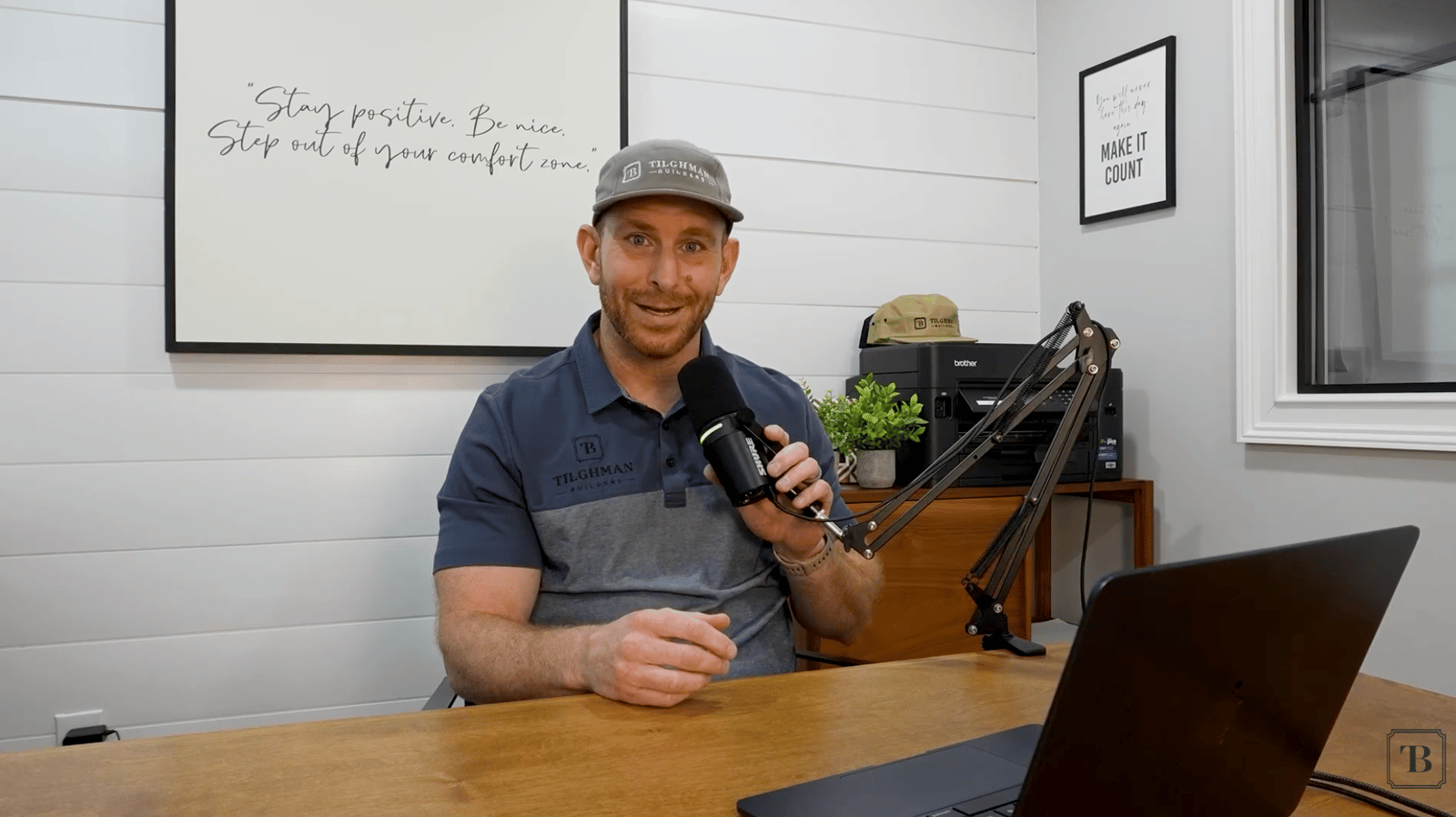

What happens when a great company culture starts slipping and it’s your responsibility to fix it?In this episode of the Built Different Podcast, Eric Tilghman shares a real, behind-the-scenes leadership moment inside Tillman Builders when the office culture became too loose, productivity dropped, and standards started drifting.
Instead of ignoring it, he stepped in.
But here’s the truth most leaders don’t talk about:
Fixing culture can feel like you’re breaking it.
In this episode, we break down:
- The difference between a fun culture vs. an undisciplined one
- Why great teams still need correction
- How leaders can reset standards without losing trust
- The reality of becoming the “bad guy” (temporarily)
- Why culture requires constant maintenance, not just creation
If you’re a business owner, team leader, or someone building a company, this episode will challenge how you think about leadership, accountability, and protecting your standard.
WATCH HERE:
Follow and listen to other episodes here:
 |
 |
 |
Hi everybody, my name is Eric Tilghman, the CEO of Tillman Builders and welcome to another episode of the Built Different podcast. On this podcast tonight, we're gonna talk about something awesome. We're gonna talk about a mistake that we made and hopefully all of you viewers can learn something from it because there's gonna be a lot of mistakes that we make along the way and I'm always going to share them with you. Honesty is one of our core values, number one, but also, You know, what better way to learn? And so anyway, we recently had a breach to our company culture. It happens from time to time. There's a list of things that could happen. You know, there's gossip, there's negativity, there's all these different things. Luckily, that's not what happened here, but this is also a big hazard. If you're trying to balance, find this perfect balance in a workplace, where we have fun but we are focused, we are loose but we are productive, that's a difficult thing to do. And so it comes with a warning label and here it is. So.
Basically, what happened was, I just kind of noticed that the office culture had kind of become disruptive. There were a lot of interruptions, things like that. We were kind of falling short on certain timelines or deadlines. Customer wasn't unhappy in these instances, but they were bad for cash flow. These are kind of internal timelines that we all know and agree on. Now, were they missed because of the office chatter? Were they missed because of those things? Not sure. I guess you could argue no, not directly, but you could also certainly argue absolutely of course, right? So we'll kind of get into it. You know, basically we have a really fun office, you know, that's important to People enjoy coming to work. We joke around. We're light. That's really, really important to me. I want people to have a job that they love, that they can be themselves at, that they feel comfortable. And that's just important. I've been in enough township buildings to want the opposite environment. And that's what we have here. We have a lot of fun. We really do.
But once in a while, the fun level kind of creeps up. And that's what recently happened. So pretty much some things that I was noticing, just too much side conversation, work not getting done as efficiently, a lot of like check-ins into the office, like, hey, you know, just want to give you an update on this, or, hey, what do you think about that? But, you know, we have meetings all throughout the week that are designed for exactly conversations and so it was a distraction. I personally was getting interrupted a lot but you know what everybody was. I heard it. People would come in, the voices would be loud. We just kind of it for you know the last few weeks I would say three weeks at most it just felt like kind of like a frat house and as the leader I had to identify it and I had to take care of it.
You know, mean, not fun, but the distractions were spreading. The vibe was just becoming just way, way too loose. And so... A great culture can drift in chaos if nobody steers the ship. So that's kind of where I came in. And first I talked to a couple of the people that are around me that I work closely with, that I've known for a long time. Maybe you'd consider them my confidants, right? But I floated the idea past them. I double checked with them, like, hey, am I seeing this clearly because it feels like the office is getting a little out of control. So anyhow, I kinda had to step in, right? I called a meeting, it was on a Thursday, just two weeks ago, week and a half ago, honestly. And...
Basically, sorry, I'm just reading my notes here. Sorry, so basically, I didn't want to have the meeting, right? Like, everybody's having fun. Okay, well, I've been pushing that for a long time. I want everybody to have fun. That's really important to me. I think it's important for productivity. I think it's important for relationships and all that, but.
You know, so you could imagine like, it's almost like I felt like I was going to send a mixed signal like, hey guys, stop having so much fun. So as the leader of the company, you know, I have to become really concise and clear with exactly what I want. Like, hey, I want you to do this, but, but we shouldn't be acting like that. Right. I want you to interrupt me if this is important in the next four hours. But if this is a tomorrow problem, I want you to send me an email, right? Or if this is not a tomorrow problem, we shouldn't really have tomorrow problems. That's the other thing is we should be so in our calendars and so living in the future that we're planning out. So any problems that arise should technically be like next week's problems. Now, my operations manager or our lead carpenters, they don't have that luxury. Usually the problems that go to them, they are kind of like, right now problems, you know? Mrs. Smith is upset about the way her tile ended up around the niche. Okay, that's a now problem. Or, you know, the vanity didn't arrive on time. Okay, that is a now problem. But really, actually, technically, we should know that that vanity isn't arriving on time anyhow. The point I wanna make is that, kind of like, your lack of preparation doesn't become my emergency. That's actually a quote hanging up on Al's wall, I think. I'm sure I got the quote wrong. basically I knew that this was gonna send mixed signals. I knew that it was gonna make people feel uncomfortable, which made me feel uncomfortable. You know, was kind of a bummer. I didn't wanna do it. But I also had to protect the standards. And so...
I had to protect productivity and honestly, I had to protect the culture itself because here's the thing, if we're just running around having fun all day, well then that's not a real culture. That's actually, that's a broken culture. That's like we're paying people to be our friend. That's a different thing. That's not a mutual respect. That's not real. That's ship with a hole in it is what it is.
And that's kind of how it felt, you know, that's kind of how it felt temporarily now another thing That should be important to note here is the amount of time that I let this go on before I handled it Maybe it was too long Maybe it was it certainly wasn't too short of a period of time. I think three weeks was I Don't know perhaps I could have nipped it in the bud a little bit sooner, but again, it's kind of like you don't really see it happen overnight. You notice it, you're like, huh. And then you move on, because you have a bunch of stuff to do. And then you notice it again. And then all of a sudden, one day, you're just like, you know what? I think this is out of control. So anyway, short term vibe drop. So we had this meeting. it was tough. It was tough on me. It was tough on them. We hit it first thing in the morning.
And you got to imagine after that meeting, after that meeting, the vibe was pretty awful. You know, I mean, nobody wanted to come near me. Right. And everybody was kind of unsure what to do. And so, you know, just like anything else, I think just some space, some time to reflect. It's important and it's needed. And you know, I think I was the bad guy temporarily and that's okay. But I think sometimes protecting the culture means correcting the culture. And it needed a course correct, that's all. And I also trust my team members. I trust that they'll accept this from an endearing place. I mean, we're all here working hard. It'd also be a different story if I wasn't here working hard. So all the business owners out there, it's tough to correct something like this if you're not also in the weeds with them, with a whole list of things to do and days filled on your calendar.
So I don't wanna say it gives me the right to say it, but kind of, it kind of gives me the right to say it. We're all busy, not just me, but them, them too. So the short term vibe drop, something leaders experience but don't really talk about. After you reset expectations, you know, the room feels quiet. The energy changes. The jokes stop. It just feels a little tense. And that's exactly what happened for a moment, it almost feels like you broke something. That's definitely how it felt. It felt like I kinda screwed everything up. Because, know, as the leader of a company, you know, again, I have a few people that I trust and I keep very close to me with, you know, sort of the things that I'm thinking and feeling from different things. But ultimately, it's you, you know? You get in your car, you drive home. And it's you, you know? And so it can feel a little bit lonely, especially after a time like that. But you gotta suck it up. You didn't really break the culture, you recalibrated it, you know? So the difference between fun and undisciplined. So, a fun culture. People laugh, people enjoy being there, energy is high, but work still gets done. So like, I think we were there. An undisciplined culture. Constant interruptions, we were definitely here too. Constant interruptions, conversations when people, I'm sorry, when work should have been happening.
Lack of urgency. I mentioned those timelines that we missed, know. So lack of urgency. That's big in this industry. Anybody who's watching this that's not in this industry, I don't know your industry. I assume it's probably also urgency is important. I just know this business that we're in, in home remodeling, urgency is very important. Standards start slipping.
I wouldn't say standards were slipping. Standards of the way that we should behave in our office were slipping. Our professionalism maybe a little bit, but only behind closed doors. Obviously customer facing everything was just as it would be expected to be. That would be a different problem. But just felt like unfocused. So I love this saying, you know, and I've had to say it in the past, and actually Ed Milet, I think coined the term, it's nothing fancy, but fun is fun, but fun is not as much fun as winning is fun, right? Winning is also fun. Like yeah, we can joke around and take this light. That's fun. But it's not as much fun as like winning and feeling like you're on a winning team.
You know, so fun is fun, but winning is more fun. And you know what else is fun? Going home with a clear plate and a clear mind is fun. And I want that for me, and I want it for everybody else. Like, really, want them to love their job, but I really, also want them to love their life. They have a whole life outside of here, and I don't want them to be distracted and carry stuff home with them, having peace of mind knowing that you completed all your work and then having extra time to collaborate with team members and help each other. You know, that's the biggest thing that I noticed for me was with my extra time, I'm able to like sit down and collaborate with people and help them more.
Whereas I kind of used to be like, Like for a long period of time. I was kind of like, you know, hey, don't don't bother me unless you absolutely need me You kind of pretend I'm not even here but now with this this You know different office vibe that we that we've recently established You know, it's giving me time to help I mean we have a lot of people training in this office right now and So that's been really important, you know, and I think that that's something that people didn't see when I brought this all up. Like, hey, I'm not just looking to get my work done and go home. I'm looking to get my work done so that I can be more helpful, so that I can be more happy. Like, I'd rather, like, honestly, I'd rather not talk about the gutter that got installed today.
Instead, I'd rather you just let me know that in an email, I'll see it when I see it. And then I'd rather save that time. And then when I see you in the kitchen, I'd rather ask you how your kids are doing in sports, or how was your weekend, or how's your wife making out with her new job? Things like that, things that matter, I want to talk to my team members about, that build the relationship, build the trust. And they're lighthearted. Anyhow, it's not like everybody closed their doors and be quiet. It's like, hey, let's just focus so that we have enough time to care about each other in other places, right? It's kind of like, like, we all love each other, and we all really have a lot of fun with each other, but we just need to find efficiencies, camaraderie is important. It's really important, as I mentioned. But, okay.
There's 12 of us in this office. So that means we need to find efficiencies elsewhere so that we can make the room for the camaraderie, make the room for the fun and the love and the jokes. We have to, it just can't be this big disruptive party all the time. It just can't. And our interruptions with each other, they have to be disciplined. You know, and we have to think ahead at all times to minimize those disruptions. And you know, here's the simple truth. And this is the first time you've heard me open up about a misstep in our culture, and I will continue to do so, because I think, well, that's just how I am, but I also think that it might help somebody out there. So culture requires maintenance. You know, I like to think of culture as physical health. know, you can't go to the gym, you can't hit it hard for four months at the gym and then, you know, go on a two week vacation and expect that, you know, with the jet lag and the time difference and the poor eating and maybe you're drinking more and you're not working out, like, you're gonna get sick or you're gonna get tired, your health is gonna decline, it requires maintenance. Your physical health requires maintenance. Honestly, here's the thing, all great things in this world require maintenance, right? A beautiful garden requires maintenance. A healthy body requires maintenance. A healthy marriage requires maintenance. Good relationships with our children require maintenance. A beautiful home requires maintenance, right? So culture's really no different. And so it's not really something that you just build and walk away from it. It's a living, breathing organism, kind of. Anyhow, standards can drift. New employees can change dynamics. I'll give you the reasons why this happened. Number one, we have a lot of new faces in the office. Think we've, just in the last year, we've hired like three or four new people into the office and they're working out great, good culture fits, 100%, good at their job, everything's good, but every time a new team member joins the team, everybody gets excited. You know, because we only hire people that we enjoy being around. You know, I mean, that's just a fact. And so, you you kind of get to, you look forward to like a new face in the office and you're getting to know them and they're getting to know you and you're excited to show them, you know, about you too. And it's kind of like a lot of ground to cover, you know, like where were you born? Like, where'd you go to school? How old are you? How many kids do you have? What do you like to do? There's a lot to catch up on. But it's disruptive, a new team member is disruptive, period. Whether it's to the field crew or to the office in here, you know, it's disruptive. And then along with that, a unique situation, we're kind of running out of room in the office. All these new team members, we had to take over one of the spaces upstairs and that's now our estimating department. we also had like a whole bunch of like musical chairs, you know? We were moving desks around and okay, this person's gonna be here and you're gonna go up there. So it was just like a kind of a disruptive time. There was a lot going on.
And then once all that kind of stopped, the vibe just kind of never came back down to normal. So it kind of just stayed there. And that's kind of when I noticed it. And so anyhow, leaders sometimes have to be the bad guy. Yeah, so this is kind of the emotional side of it. This is tough.
If you're anything like me, you don't want to be a bad guy. You want to be a good boss. You don't want to be a bad boss or a scary boss or anything like that. You might prefer being a positive leader or an encouraging leader or the guy that celebrates the team. But sometimes leadership means calling things out, raising the standard, and you know, making people uncomfortable. It's just part of it. But the important thing is that we've built a base, right? Like I went to my team and I said, guys, you know, this was, this was maybe this was a bad month, right? And everybody's kind of up out of their chairs, inefficiently communicating and checking in and all these updates and being loud and interrupting Zoom calls and all that stuff, which I was also guilty of and I admitted in front of my team, which is another important piece. I never just pointed the finger at them. I kept pointing it back at me. And I also kept pointing it back at me saying, like, even if I wasn't being disruptive, which I was too, you my personality, I like having fun too, you know, even if I wasn't, I would have pointed it at myself and said that this is all my fault because I allowed it to happen, right? So I think that's an important thing. I think we'll eventually get into extreme ownership. A book written by Jaco Willink, all about extreme ownership. And that's the way that I like to lead. That's the way that I like to lead my entire life. It gives me the power to make changes that are necessary. I never give the control to somebody else. It allows me to make those changes.
In this meeting, I constantly referred back to myself as being a contributor to the problem. But what I was starting to say is that prior to this meeting, I had already built a foundation of trust and respect with these team members. they care about me. They know that I care about them. There's really no question there. And so when it comes time for a tough conversation like this, This isn't the 20th time I've done it, right? Like, it doesn't happen often. And most of the time I'm saying nice things about their performance or, you know, or building the relationship, asking about their weekend, whatever it may be. My point is, I didn't come out of nowhere with this. They all know me and it's just important to establish that trust. And it doesn't happen overnight. You know, we, I may have already said this on this podcast, but you'll hear me say it a whole bunch of times, like, what's the best way to lead your team? Well, show your team that you care, okay? What's the best way to show my team that I care? Well, actually care. That's it. That's it. We talk about that in our leadership meeting a lot. And I like that line because I live by It. I don't know how to lead any other way.
You know, I genuinely care. And if I'm upset with somebody or frustrated in some way, it's important for me to put that in perspective and either handle it with a conversation with that person or let it go. But holding on to that can't happen. You know, I have to stay grateful for my team and so should all of us. What's the best way to show my team that I care, to just care, right? It all comes out, right? You can't pretend to be someone you're not. We've all felt that, that fake, phony, whatever, know, whatever it is, you know? So anyway, it's important to just kind of live in that zone. Respect comes from standards. So even after my team felt uncomfortable, they know that I care, they know that standards matter, they can look around and see that I'm kind of right, you know, and that it's not an irrational thing to talk about. And they also know that someone is protecting the mission. And I think that's really important too, because yeah, employees and team members, they want to have fun at work, I think, I want to have fun at work, but most people also want to make sure that like the ship doesn't sink. And so, you know, they need to see the leader being responsible and calling balls and strikes, you know, and there was a ball, you know, and I had to call it even if they didn't like it. You know, they may not like the correction in the moment. They definitely didn't. And, you know, any of my team members that are watching this, I love you guys and thank you for hearing me out. And thank you for this last week and a half. The vibe's been perfect in the office.
And really, know, culture's a balance, right? And this is the difficulty that we have, and anybody has who wants to start heading down this journey. You know, I remember in the field, when I was in the field, we used to have long lunches, like, this is a 30 minute lunch break, right? But whether it's hot, or it's cold, or it's a perfect day out, like, eventually the lunch breaks just creep. Like, if you like each other, it's gonna creep or if it's super hot, it's gonna, excuse me, it's gonna creep or if it's super cold, it's gonna creep. Like those 30 minute lunches gonna become 40 minute lunches, 45 minute lunches. And then I remember multiple times saying, hey guys, look, happy Monday. This has been on my mind all weekend. I just gotta get it off my chest. Our lunches, mean, I blame myself for allowing it, but our lunch breaks are supposed to be 30 minutes and they've been creeping. And like all last week, I allowed 45 minute lunch breaks. I just want to let you know, this week we're going to bring it back down to 30. I love you guys. I could sit there all day with you. But you know, as much fun as fun is fun, winning is fun, right? Like as much as I love hanging out with you guys and having fun, meeting my deadline is really important too.
And without that, if we fall behind on our deadlines, well then what kind of leader is gonna show up? A worried leader, a stressed out leader, a frustrated leader, that's not who we want. So we have to stay in front of the smoke, right? I always imagine like a dust cloud and I'm kind of running down the road and it's like, can get stuck in the smoke.
But if you if you just run hard enough you can get out in front of it and then just maintain You know, we don't need to do anything crazy here. Just maintain that that front position that forward position With things like threats, you know, whether it's this culture thing I'm talking about right now or Or anything else, you know deadlines emails you name it So anyhow what we want is energy, focus, camaraderie, and humor. We want that. Energy, fun, camaraderie, and humor.
But we also want focus, discipline, productivity, professionalism. We want to be on a winning team. And my team just needed to be reminded of that. That's all. I love them. And I'm grateful for them. And they know that. But somebody had to step in and just kind of get the ship back in the right direction.
Great teams operate in the middle of that balance. That's absolutely true. When a great culture isn't just about positivity and fun, it's about standards. And every once in a while, the leader has to step in and remind everyone what those standards are.
My water's done and so is this podcast. So anyhow, I hope this was helpful for you guys. You know, and just to kind of go full circle here, the vibes are back, you know. We're messing around when we see each other in the kitchen, but we're doing it with an inside voice so that we're not interrupting people. You know, the conversation I had, made a difference, a big difference. You know, we're all going home with a clear plate and a clear mind. And that's really important too. And if they're not feeling it already, I bet they will soon. Where it's like, darn, you know, yeah, I did, I was having fun, but I didn't realize how much fun I wasn't having, because actually, I was like behind on stuff, and that would stress me out after work. And so now I don't have that, and that's great too. So anyhow, I hope this podcast was helpful.
It was a, it's an interesting topic. It was a little bit hard for me to decide whether or not I wanted to make tonight's episode about this. But I'm glad that I did. I believe that vulnerability is a good leadership trait. That's, you know, certainly an approach I've always taken to leadership. You know, just being open about the things that you are not doing well.
Because as people we all we all have them And I think it also makes you human and so hopefully this podcast has made you see me as more of a human We don't have everything right we never will and that's the point of this podcast neither will you? Anyway, I just I like just coming on here. I like I like talking about this topic it's really important to me as you know and I'm looking forward to our next episode and maybe I'll fill you in on how the office is doing. It would have been maybe three weeks or possibly five weeks at that time by the time I shoot another solo episode. So anyhow, everybody, thank you so much for staying tuned. Stay positive, be nice and step out of your comfort zone.