

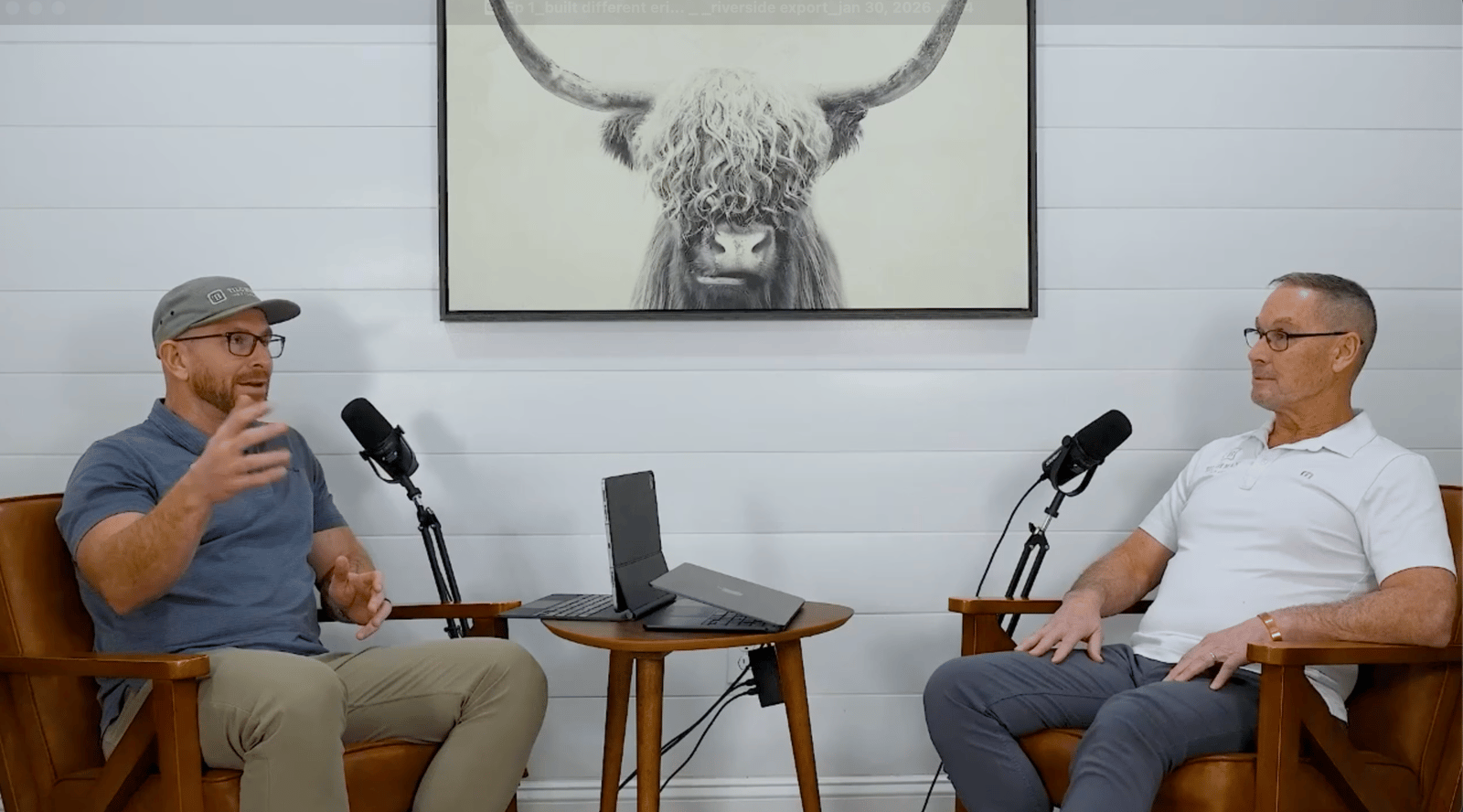
In this engaging conversation, Eric Tilghman, CEO of Tilghman Builders, and his father Bob Tilghman, the Founder and CFO, discuss the evolution of their family business, the importance of company culture, and the values that have shaped their success. They reflect on the challenges of transitioning leadership roles, the significance of teamwork, and the impact of a positive work environment on employee retention and business growth. The dialogue emphasizes the importance of honesty, integrity, and hard work, while also providing insights and advice for future generations in the construction industry.
WATCH HERE:
Follow and listen to other episodes here:
 |
 |
 |
Bob:
TEASER: important is culture. I mean don't we have you know sales to do and additions to build and you know people to hire but now that it's been implemented and really fine-tuned I brag about our culture. I totally get it. It's it makes it's all the difference in the world. If you don't have the culture in your company it's really hard to grow.
Eric:
Hi everybody, my name's Eric Tilghman, the CEO of Tilghman Builders. This is our very first podcast. It took us a long time to get here. We're happy to be here. And when I was thinking about the first guest to invite onto the podcast, I couldn't go much further other than our CFO, our founder, the entire reason that any of this could be possible, my dad, Bob Tilghman.
Welcome to the podcast.
Bob:
Thanks Eric. Hello everybody.
Eric:
So first of all, I've been calling you Bob at work for probably 15 years now. So let's just start there. How is it having your son call you Bob as much as I do about that.
Bob:
Well, it took a little getting used to, but I'm fine with it now. And when we're in family events, you know, I usually get dad.
Eric:
Right, Yeah. How's mom feel about me calling her Joanne?
Bob:
Yeah, I figured I get that sense.
Eric:
All right, so well on this I'll try to call you dad. We'll see how it goes. So company culture is obviously a passion of mine. But I can understand you know sort of a construction dinosaur such as yourself. You've been in this game a long time and the industry has changed quite a bit. It may feel like, I don't know, culture may feel like millennial mystical nonsense. Tell me what culture means to you.
Bob:
Well, I didn't really know what culture was until you started talking about it and started turning me on to some things like Simon Sinek. You really pretty much showed me what culture was. Prior to that, I don't think we really had a culture. We had values, obviously, but not really what you would call a culture.
Eric:
Right, okay. Yeah. Okay. So how has your opinion of culture changed? You know, I kind of came in out of the field and was kind of banging that drum hard from the beginning. And I know that was probably our biggest challenge, was we started working more closely together. How has your opinion of culture changed since then?
Bob:
It's changed. It's done a 180 because when you first started talking about it, I was like, well, you know, what is this? How important is culture? I mean, don't we have, you know, sales to do and additions to build and, you know, people to hire? But now that it's been implemented and really fine tuned, I brag about our culture. I totally get it. Makes it's all the difference in the world. If you don't have the culture in your company, it's really hard to grow.
Eric:
Yeah, yeah. Yeah, it's been fun watching you turn around on that. But in the beginning, yeah, it was kind of like, OK, here he goes again, you know, but there's work to be done. So, you know, maybe later. All right. Good. So what made you want to start a construction company back in 1982?
Bob:
Yeah, well, you know, ever since I was a kid, I was always, I always had an entrepreneurial spirit. I always wanted to make my own way, make my own money. I was a paperboy. I was working at a gas station. And then I started, you know, just doing like little projects. I build like furniture because I was, you know, I learned to do that in shop class and my father used to do it as a hobby. So he taught me a lot of things. So I kind of started just building furniture. And then, you know, I started to doing little jobs and things like that. And eventually it got to the point where if I didn't go into business full time, then I was going to lose this big project that was on the horizon. You know, was December, don't need a winner. We just bought our first house, just had our first child. She was almost, I guess, five or six months old. No, she was only four months old. That's right. And then we decided to just go into business. I was 21 years old and didn't know anything.
Eric:
All just to get this job. Do you remember the name of the client?
Bob:
All just to get this job. Yeah, Steve Silverman. He always said that he was the reason that I went into business. And he's got it right.
Eric:
Yeah, sounds like it. All right, cool. You think back then, you wanted to land the Steve Silverman job, but did your vision go as far as all this that we have today?
Bob:
No, no, I never would have thought that we'd be here. You know, I always figured that, you know, the company would grow and, you know, I would take on him, which of course I did. And maybe I'll come out of the field at some point, which I did. But I never, I never envisioned that we would be where we are today.
Eric:
Cool cool. So in the first few years it was, it must have been you working alone or for at least. Well, maybe not maybe the Steve Silverman job was big enough. I know my uncle Doug, your brother, worked for the company for a while and some other guys. What was the culture like back then back in the 80's? You guys were wearing short shorts. What culture. Okay. Yeah, was it it had to have been kind of a war zone.
Bob:
Wasn't a war zone, but it was a construction site. And, we were construction guys. So we were, you know, we acted like construction guys. You know, there wasn't a lot of kindness going on or complimenting. And it was more like just kind of get the job done. You know, could get it done. Yeah. And do it right. The craftsmanship aspect, that was always there. You know, that was apparent. But that doesn't make a company.
Eric:
Yeah, yeah. Yeah, there's early days there probably weren't performance reviews in the company.
Bob:
No. Well, your mother would give me a performance review once in while.
Eric:
Yeah, she still does. She still does. She gives you my performance reviews too. All right, cool. So it's not uncommon for a family business to fail once it hits the second generation. Okay, that's been, you've kind of been giving me that stat my entire upbringing.
Bob:
Yeah, I kind of have and I do recall doing that, you know, on number of occasions, letting you know that most second generation businesses don't make it. Right. And that's just what I had heard, you know, talking to different people. You know, I knew a lot of business owners as I was, you know, growing my business and that's what I'd heard. And I felt the need to pass it on to my second generation.
Eric:
And you did. It probably was quite a burden to bear. It's okay. I think it shaped who I am today and the way that I treat the business. I had to have had you nervous along the way. I mean, it was like, I've been working in this company since I was 13. You made me get a summer job. Yeah. And I remember asking you on the way to the job site, I was nervous. You said, look, whatever you do, don't stand still. Just keep moving, do whatever they tell you to do. And then when you're not doing something, pick up a broom and do that. And then I got older and became more of a teenager and maybe perhaps more of a punk. Were there points along the way where, I don't know, you didn't really see me in it?
Bob:
Oh, for sure. Yeah. There are times where, well, your mother too, you know, there are many times where your mom would say, I don't, I just don't think Eric's ever going to be able to take this business over. He just, he just doesn't have what it takes. He doesn't care about his finances and all these kinds of things. Cause you were young. Yeah. And then when you're working in the field, you know you're living at home at the time and you would be sleeping late and I know you're going to work late and at one point I was on my way to the office and you were still in bed and I know it and you're going to be late and I called the lead carpenter for that job and I said to him you know when Eric gets there send him home to me late and so he did and it happened I don't know maybe one or two more times and you got fired.
Eric:
I sure did.
Bob:
Yep. And I think you can speak for yourself, it seemed like it may have helped you.
Eric:
Yeah, it did. It definitely did. I mean, in the short term, I was still just a young kid. You know, was I had basically been asked to leave college after two years, came back. Well, actually, that yeah. And then was living at home, working back for dad. And I think I was just wrestling with like, you know, the real world and not sure of my place or my passion. I was far from any sort of passion back then. I liked being a carpenter, but I had my priorities mixed up. So, yeah, you letting me go. Worked elsewhere for three years, and I think that that was I think that that was an important thing that happened in my childhood.
Bob:
Yeah, I mean, it seems to me like when you went and worked for that other contractor, was three years. I think it really kind of shaped you, taught you a lot of things. When you did come back to Tilghman Builders, I mean, you brought a lot with you that you learned working for somebody else. It was really valuable.
Eric:
Three years, yeah. Yeah, yeah, yeah. Well, it was nice to come back. And I remember when you asked me to come back, I was driving you to the golf course. You were it was like a golf outing, I guess. And for some reason, I gave you a ride and you asked me to come back. And it was an easy yes. And I think it was time. So what values or lessons, you know, what values or lessons were you intentionally trying to pass down to me? I have three kids now and the two oldest are boys and I am intentional about what I say to them and what I tell them is important in life and things like that. What were some things that you were trying to pass down to me that you feel stuck, like stuck with me and are now, they worked.
Bob:
Yeah, when we were raising you, I think the things that we, your mother and I were usually on the same page as far as how we wanted to raise our kids. But it was all about being honest, always telling the truth, and integrity, know? Doing what you say you're going to do, showing up one time, not being lazy. That was a big one, you know, and working hard. I always worked hard. My father always worked hard. It was kind of instilled in me. I enjoyed that. And I wanted my kids to have that too, because I think it's really beneficial, you know, not only because it's good for your work life and your work world, but I think it's good for your mind.
Eric:
Yeah, yeah, hard work was always kind of a family value growing up. I mean, I just remember my chores were they were kind of ridiculous compared to some of my friends. They'd have to weed their little garden and I'd have to like, you know, spend eight hours in the field cutting the grass, you know. But no, think that that's true. Hard work. Even the girls, you my sisters, they work hard and mom always worked hard. Yeah.
Bob:
Yeah, the whole family. And nobody complains about it. It's just what we do.
Eric:
It's just what it is. We've renovated some family homes.
Bob:
And when you say we, you mean we.
Eric:
The family. Yeah, the family. Yeah, I remember Carly was pregnant. Carly was pregnant when we helped her with her house. And it was not helped her with her house. It was a full and disgusting gut renovation. Yeah. Taking the chimney down from the roof all the way down. I remember Tara with the jackhammer covered in red brick dust. Yeah. And it's just yeah, it doesn't feel like much of anything. It's just what had to be done and it was a mountain to climb and you know, it's. Yeah, and we always have fun. We always like had fun and like found moments to make fun of each other or laugh or you know, mom has her certain things that she does that make us all laugh and then you know, you're a certain way with your lists and you know, like.
Bob:
We all shift in to get it done.
Eric:
And then obviously teasing Carly's husband Adam who was like new to the whole thing, right? It was extreme. Yeah, it's not light duty work. You know what we were doing. So anyway, that's great. And I like what you said about honesty and integrity because you know, think that's I mean, well, honesty is one of our values here at the company. But when we stumbled upon our values, it really felt like if you remember our business coach was having us choose from a list. List and we kind of circled a bunch and then it kind of like sat with it and we weren't really sure what to do and then at a team meeting, three words flew out of my mouth and they kind of just stuck and then it was like, that's it. Honesty, accountability and kindness and honesty is one of those things that I didn't realize how important it was.
And I didn't even realize that I was doing it. I just didn't want to have to prepare for any. So I'm like I can just say the truth all the time and then I never need to remember what I said. Yeah, and you know what looking back? Yeah, you're right. You did instill that in me and it's funny to grow up and you know, you become an adult and then you I think every person does this.
Bob:
Can't go wrong.
Eric:
Where they look back and they think like, what shaped me? What are those things? Some things are good things and some things are bad things. I think that's, you but they all matter. Yeah, yeah, they all matter. And they stick. So anyway, that's that's awesome. So let's see. So transitioning, you know, it was back in 2020 that I kind of came in from the field.
And you know that that whole thing was it was years in the making. I mean, I'll kind of fill in the view. But it happened quickly. Yeah, I remember it was probably twenty seventeen. Was in a basement trimming out a door and I just I was listening to podcasts about business and leadership and personal development and things. And I remember I left the job site. Said goodbye to the crew. I'll be back tomorrow. I went home. I cleaned my garage to clear my head and then I called you and mom and said, I think I might want to quit. I'm not fulfilled. I'm not, you know, whatever. And it was an hour conversation. I remember. And, it was a good one. And at the end, you basically said, why don't you take all that energy that you have to create your own business? Or I wanted to flip houses at the time. He said, why don't you come in and pour that energy into our business? And that gave me a bone to chase, basically. I did. And so, you know, I spent the next two years really just daydreaming about the time that I would get to come in here and make some changes. And I didn't know when it was going to happen. And it didn't matter because I spent a lot of time just visualizing it and learning. I liked doing that. And then 2020 came.
Bob:
And boy did you chase.
Eric:
Back orders, windows were long lead times, 20 some weeks, cabinets, same thing. And it was at that time, I remember suggesting to you, hey, we're gonna lose control of this ship if somebody's not in charge of these orders. And so that was kind of like my first step in the door in 2020. And so I came in as an operations manager was the title.
And so, you know, started immediately kind of stirring up, you know, opening cans of worms in here, immediately making changes. What did you feel at that time? Like, you had to have been, you had to have had an opinion at that time. I came in, I was naive, I didn't know what I didn't know, but also I thought I knew everything, you know? So tell me how you felt.
Bob:
Well, you did come in headstrong and that's great. But honestly, what I found was that you were doing all these things that were out there, they had to be done, And they either had to, prior to you coming into the office, they either had to be done by me or one of the lead carpenters. And I don't remember how many we had at that time, but you know, a lot of times it was, you know, the buck always stopped with me. So, you know, I had to make sure that it got done. And it was a lot of pressure because I was doing all the other things in the business. I was doing all the selling, the estimating at the time, and also, you know, all of the, you know, admin stuff and running the business. Marketing, yeah, marketing. Yep. So, you take wanting to take those things over was actually a relief for me, you know? So I welcomed it.
Eric:
Yeah. Yeah. What I remember, it was kind of, it wasn't in the very beginning, but it was towards the beginning where, you know, we had, I had started doing all the hiring for the field crew. And, you know, I was choosy when I could be and we had a good team. And then there's, know, in any construction company and other companies, there's slow times, right?
The winter, you dry up in the winter. It's been, it's a tale as old as time. And typically you lay people off during those slow times. Those people collect unemployment and just kind of is what it is. It's part of this industry. And then I made a suggestion, hey, how about we don't lay people off? So like, culture is such a big thing. There's so many levels to it and it can't be covered all in one podcast. But like that's something, right? We don't fire our children. I don't get to sell the kid that's giving me the hardest time at that moment, right? We have to endure things as a family and we have to lead and things like that. But what was your initial opinion of that? All right, we're not going to lay anybody off.
Bob:
Initially, yeah, I had a negative opinion of it because, you know, it's all about the numbers, right? Yeah. You know, and you've got to have the money to pay the people. If there's no work, what are they going to be doing? They're just going to be standing around or, you know. So, yeah, it didn't sit well with me in the beginning.
Eric:
Yeah. And now here we are. Haven't laid anybody off in. Well, there was a time before that, I think there was just a lucky streak of, you know, a couple of years where we had work and didn't need to. What are we going on? Seven, eight years, eight years, no layoffs, something like that.
Bob:
I'm sure that's about right. And by the way, I get it now. Yeah. You know, and I completely agree and I can see the value of it. I mean, it's all about it's all about trust. If you know your employees are there are family. They really are. I mean, the Tilghman Builders family. And I feel like you do that, you know, there are family, our children, whatever, however you want to look at it. And it's our responsibility to make sure that they're taken care of. And taking care of them means that they're employed and that they have a good work experience.
Eric:
Right. Yeah. Yeah. And you know what I've noticed is when you make those tough decisions in a company, right, it's more profitable to lay people off. Well, I could argue that point because I think that then you have to hire new, which costs money, and then you have to train, which costs money. And it's not easy to train people, especially complicated systems like in a business like ours. We don't make skateboards. We don't make t-shirts, right? I could probably cover those systems in a one page document, right? This is a loaded industry.
Bob:
Every job is different. Yeah. Every client's different.
Eric:
Yeah, yeah. And so I just I think that one of the big things that makes our, you know, the members of our team love the company. One thing is they feel it. They feel that we're there for them. And, know, everybody every company in the world says we love our employees, you know, but when they literally see you put your money where your mouth is and not laying off is they know when they're in this garage organizing the garage at the shop. They should be at home collecting unemployment and they're not right. And so, yeah, I appreciate you coming around on that. And I've watched you come around on a lot of things over the years. Is there a moment in time where you realized that culture mattered just as much as craftsmanship? Was there anything in time that stuck out?
Bob:
Now I probably can't pinpoint a specific time, but you know, clearly I've come around and I, I mean, it's all about the culture and I'm completely on board now. I don't know when it happened. It probably was very gradual, but, know, craftsmanship has always been there and, you know, like we say, craftsmanship is a given. We just assume that that's going to be the case. And obviously we've monitored and make sure that it is, but the difference maker really is the culture. I see it. I'm your biggest advocate for the culture train.
Eric:
Yeah, I know you are. I hear you talking about it, you know, when we're out, you know, with family or friends, you know, just talking about.
Bob:
Last night, that your cousin was over and that we hadn't seen him for a while. And we were just talking about the business and how the culture and you working on the culture has really made the difference in the company and in the growth. The result, client experience, that's the most important one.
Eric:
Yeah, and that's a big one. Yeah, because we, I mean, like I said earlier, we don't sell a t-shirt, right? You don't just walk in the Tilghman Builder store and walk out five minutes later with a shirt. It's a long and intimate and emotional transaction, right? We are in your personal space. And, you know, it's important to me that our homeowners feel like no negativity, like they just feel like people like being there and they like each other and they like the company that they work for and you know, all those kinds of things. What would you say is the like, why does what would you say is the most important result of having a healthy culture? Like, why? Like, who cares? Who cares if you know, what do you see?
Bob:
Well, I think for me, I think it's the fact that you know that your employees, by and large, are happy with where they're working. They like to go to work every day. You know, that's not generally the case. I mean, in most, I don't know about most companies, but a lot of companies, you know, people kind of dread going to work, you know, and they can't wait for the weekend or can't wait for the day to be over. And I feel like the sense I'm getting from the guys in the field and the people here in the office is that they really like their job and they like working for this particular company. They like each other. That's important.
Eric:
Yeah. Yeah. The thing that I've noticed over the years, because in 2020, we didn't really have a culture. Like, I wanted one, but and I was working towards that, but it wasn't there. We had some bad eggs, know, and just big culture fits. Yeah, and we had to because, you know, hiring was tough back then. And, you know, it was just a part of that time. Right. And the industry that we're in is so complicated. We're changing systems all the time, right? Like we just changed one 10 minutes before we started this podcast here. You know, we did. And so changing systems like it happens a lot. And it temporarily makes everybody's job harder because they have to remember to do a new thing. And in some cases systems are pushed back against right? It's like there's resistance. From now on every time anybody installs a door. We're gonna take a picture of it with company Kim, right? Like that's inconvenient, but what I've noticed through having a healthy company culture is kind of like buy-in, right?
Bob:
People are accepting it much easier.
Eric:
Yeah. Yeah. Yeah. And like, it's not an easy industry. And so I've noticed that our team members are more willing to do the thing because it benefits the team, the team that they love, the team that they don't want anything to happen to. Right. I kind of like see it as like the guys protect the culture and the team in such a way that it's like, no, no, no, I love my life now on this team. And I'm not going to let anybody mess that up for me.
Bob:
Yeah, I hear it. Now you mentioned earlier that, you know, back, you know, five years ago, it was, you know, harder to hire people, right? And took what we could get at the time. Do you feel it's still hard to hire people? Why not?
Eric:
No. I don't know. Think, well, first off, the building is beautiful. The team, when a new hire comes into the office, they're greeted by there's 10 friendly faces in this office. But the other thing is, you know, people can smell sincerity, you know, and you don't have to kind of get me going for too long about culture and about how much I love the team and all that before you realize that, no, maybe I'm off my rocker, but I mean it. And I'm dead serious. It happened for a while. And so I think that in our industry, guys are beat down. You know, they're beat down. There's just there's so many companies where they just maybe they don't have enough time, but they just they don't handle their employees with care. I think that when they come here, it's refreshing. I think that's why.
Bob:
We make it a priority. Care of our people.
Eric:
100% yeah, and I can see it. So we've basically 5 X the business since 2020. Yeah, okay, it's a lot of growth. It's a short amount of time. I believe that it's all because of company culture. There's a lot of things along the way but company culture and you know we don't houses but that's the foundation right like. To put in all this work and all these systems and try to make happy clients and all this stuff, but to build it on top of wet sloppy soil is a mistake. And so I feel like company culture really is our foundation. It's not everything, but it is at the bottom. It is the base. So what new strengths, what new culture strengths do you see if any today? That you didn't see I don't know back in 2020 like there's a lot going on here.
Bob:
Oh, yeah, like probably most of them. For instance, one thing is like when we hire a new person, you know, obviously they're vetted by you and or JP or whoever's doing the hiring and they get background checked and drug screening and all that stuff. You know, they pass with flying colors. Sometimes they'll get in the field and turns out that they're not the fit that we thought they were. Right. But fortunately, we have such a good culture and we can really trust our people that they now vet them. So it's kind of like a trial period. You know, for that first week, we look for feedback from the field guys. And if there's a problem, if they're not a good fit, they're gone. Don't hang on to them. They're not a good if they're not a good culture fit, we're not going to keep them.
Eric:
Yeah, yeah, you're right. You're right about that. I wasn't sure what you were going to say there, but you're on the money. There's not one person here that doesn't love and appreciate this company, this culture, this team. Right. And they want to keep it that way. Yeah. And that really is the mission. Right. Like, well, the mission is to provide homeowners with worry free and pleasant experience while renovating their home. This is how we do that.
Bob:
This is how we do.
Eric:
Yeah. Hundred percent. I never saw this six years ago.
Bob:
Right.
Eric:
Yeah. Yeah, it's yeah, there is a level of like you got to have faith and trust. Yeah, there's a lot that goes into it. But that's great. So what advice would you give another remodeler who wants to? Well, better yet, what advice would you specifically give to a founder? Right? Maybe they're looking to pass their company on to second generation. Actually, just I'm having a water softener installed at my house and the guy comes out and looks at it. Really nice guy. And then I heard from the admin later on to schedule the installation and I complimented the guy. I said he was a really nice guy and he was helpful and stuff. And she said, yeah, that's the owner's son. And he was younger than me and I could tell that that you wasn't quite there yet. He wasn't entirely involved quite yet, but there's a lot of businesses out there where we were at one point where, yep, dad started the company, the son is coming up and what advice would you give him?
Bob:
Yeah, I guess the best advice I could give them if they have a kid in the business is to just instill those types of values. If your family member that's in the business is going to work hard, and they're going to be honest and accountable, and you're going to have to help them along with that because they may not be all the time or in the beginning or whatever, but help them get to that point. I think that's probably the best way to get things moving in the right direction. And the other thing I would say too is like sometimes people don't have a family member in the business. If they don't, I would say identify a key employee you can see would have the interest and the drive and the desire to carry on that business and just groom that person.
Eric:
Yeah, yeah, that's good advice. That's good advice. And what would you say? Because, know, I mean, it was a slow progression where all of a sudden I kind of was ready to become more part of the business and more, you know, in the office and things like that. So what would you what advice would you give to a founder who their child is there there. They're hungry. They got some wacky ideas. Not sure how to handle them. You know, I've been doing this for 40 years. You don't even know what you don't know, right? Like I'm just I've never been in those shoes. Not yet. But you have so what any any advice?
Bob:
Yeah, I mean, I think the advice is to just, you know, be open minded because what you have to realize is that, you you've been in it for 40 years and yeah, you might be a little bit of a dinosaur. There's things that because you're older, you may not see them, you know, and somebody from the generation, you know, younger generation from you is going to have some newer ideas and think about it, I every business goes through this whole thing where they're just growing, but they can't do that if they don't introduce new technologies, new ideas, and those kinds of things. So I think that's really what it's all about.
Eric:
Yeah, yeah when I look back at some of the many changes that we made over the years they all seem to come at just the right time, you know, and and that's something worth noting, you know.
Bob:
Doesn't happen by accident, it just happens.
Eric:
Yeah, yeah, and I think Steve Jobs was famous for saying, you know, it's hard to connect the dots looking forward, but it's always so easy to connect them looking back. So I think, you know, and I'm just a big advocate for you know getting the ship out of the dock you just we don't know. You know we could put this on a spreadsheet figure out 3 months from now what exactly where we're going to be and what you know is this big chess game, it's like.
Bob:
Sure sure. That would have been my way of doing things. And I are different, ballet.
Eric:
Yeah, are yeah, I like to kind of just jump, know, and that can come. You know that can be a bad thing. To you know and so I think that the way that the company is structured now is there's checks and balances right like there's so many personalities in this office some like to move fast like me and others like to move slower and more methodical.
Bob:
Yep, some are more analytical. And all those different minds in here, I think, really help to shape and grow our business.
Eric:
Yeah. So. What looking at the company today, right? We have about, I think we're pushing 40 employees. A lot of people, a lot of people part of this, this mission. And, and for the viewers, you know, the, the vision here is, is we think that we have an unbelievable business model. And we talked about this at the team meeting. It's, it's almost silly.
Bob:
Yeah, hi, Thursday.
Eric:
Right, what's the business model? Hire great people and be good to them no matter what and be honest with them, know, honest feedback like it. Yeah, the good and the bad, know, but but really caring about them as if they were your family or your children. Right. I always take leadership and it's so easy to compare that to fatherhood because and what a great topic that is because you're my dad, but like, you know, it's just you have to, you can't give up on people. Like you have to figure out a way. If one of your children is struggling with something, well, yeah, and you got to get creative and you got to, you have no choice.
Bob:
You're always going to be there for them. Yeah, and we have with our employees. You know, mean, people have problems sometimes and troubles and or whatever. And, know, we we try to help them. We work with them to get them through whatever they're going through. It's worked out well.
Eric:
Yeah. Yeah. So, so what makes you most proud? I mean, looking at the company today, what, I don't know what, what is, what is the thing that makes you most proud?
Bob:
I guess the fact that we continue to do really great work and the fact that we're doing it with such terrific people, you know? I love the people that work in this company. They really do feel like family.
Eric:
Yeah, yeah, it's almost like, it's almost like, you know, this was in some ways, this was kind of built in self for selfish reasons. Like, I literally just wanted to have a nice life and be surrounded by nice people. That's that's like a big part of this, you know, and.
Bob:
Could also provide an income and careers for a bunch of people and terrific projects for the community. All the better.
Eric:
What do you hope for future generations? This doesn't stop here, right? This is now a legacy business. Just is. It's going to continue to grow and improve and expand. And the reason is because we, like I said, we think we have a wonderful business model that is good for employees and therefore great for clients. And the world needs it. That's our vision. So as this goes, maybe my sons or my daughter take things over, what do you hope to see continue?
Bob:
The name. Company name.
Eric:
The name. All right. Yeah. Yeah.
Bob:
And obviously craftsmanship is still in place. That's key. Yeah, just the whole idea of this nice culture, nice family that we have here. I'd like to see that continue regardless of how big we get.
Eric:
Right. Yeah. Yeah. And that's something that me and JP talk about often. Yeah. Because when I passed the. He's responsible for a lot of the culture thing. Right. Yep. And he's responsible for the culture in many ways, more so than I am these days. And that was something I was nervous about when I handed that off to him. Turns out he is better at it in many ways than I am. You know, he gives better feedback.
Bob:
JP is our operations manager. I just complimented him today because I heard some great feedback about one of our employees and I said JP, this is all you. Doing a terrific job with our people.
Eric:
Yeah. Nice job. 100%. Yeah. Yeah. And so like I didn't.
Bob:
It's good for them. I mean, they're growing and becoming better, making more money. It's a win-win.
Eric:
Yeah. Yeah, yeah, it is. But as we grow, as we continue to grow and expand the company, eventually systematizing culture is kind of the next hurdle. Know, I mean, there's a lot of things between now and then. But eventually that has to happen where we actually systematize this culture. And we have a requirement for who is put in leadership positions that are centered around the culture or in the center of the culture, where they have to meet a certain criteria type of person. So, all right, cool. So Tilghman Builders, the name, I was just thinking of that recently, actually, and it's funny that that's important to you because I think that that's really important to me too. And I thought like, boy, if there was a global company, right? Some awesome great global company. If Starbucks, I don't know what it was called when it first started. You know, maybe it was, you know, John's Coffee. Like John's Coffee can make it. It doesn't matter the name, you know, it matters the product, you know. All right. Well, this was an awesome first episode. This was a lot of a lot of. Was a lot of fun.
Bob:
Was lot of Yeah. Down memory lane, it's nice.
Eric:
Yeah, yeah, and it's not often that you and I get to sit in the office by ourselves and talk shop. So, well, anyway, thanks. Thanks, Dad. And I love you.
Bob:
I love you too, son.
Eric:
So everyone, thank you for staying tuned. As always, stay positive, be nice, and step out of your comfort zone.